Showing posts with label reflection. Show all posts

Saturday, February 10, 2018

Our Work is Worth It!

Today’s post is brought to you by Kevin Hunt, middle level generalist at
Williston Central School and PLP Pathways contributor.

It seems  whenever there is a paradigm shift in education it is always accompanied by the response “give it a few years and this will pass too.” I haven’t been in the field long enough to confirm this, but I have been in plenty of meetings and have attended several conferences where I’ve heard veteran teachers mutter these disparaging words. I’ve always done my best to remain optimistic and look at change in education as something exciting and refreshing, but at the same time, I often try to empathize with those with decades more experience than I have and think to myself, would I be saying this too if I’ve lived through so much change that felt meaningless?

I’ve recently been reflecting on this and thinking about what an appropriate response would be to those who are skeptical about personalization, PLPs, negotiated curriculum etc.  I believe it’s important to stop and think about why we make the changes we make, and when we are hearing those uncertain voices, how do we remain positive, and where do we start? It’s not always easy going against the grain, and it’s even harder when you feel like you are alone in embracing change. One of the most common questions I hear from educators around the state is “How do I start?” The buzz around Act 77, PLPs, personalization, PIPs, negotiated curriculum, PBL-- and every other acronym that is trending right now-- can seem foreboding and overwhelming, but if we are doing these things for the right reasons, the payoff (in the form of student engagement and love for learning) is completely worth it.

In addressing the ‘how do I start’ question, I began to look at Swift House’s structure and its beginnings over 25 years ago. I found that when a paradigm shift happens for the right reasons, with students’ best interests at its core, then it will not merely go away over years, but rather evolve into a system that best serves the learner.

I unearthed some of the original documents from Swift House’s inaugural year and in reading these documents, I felt as though I was like looking into the past and seeing the present. So many of the ideas, compromises, and non-negotiables that Swift’s founding members decided on over 25 years ago still ring absolutely true to this day and show how a student-centered culture can be sustained.

Here is a link to the meeting notes from 1990, which outlines the teachers’ visions, philosophies, non-negotiables from creating this type of learning environment; along with noting ideas about goal setting, student-led conferences, project based learning, and negotiated curriculum. These ideas that started Swift House are still at its foundation today.

Julie Longchamp, one of the original Swift House facilitators,  recently conducted a survey of former Swift students who are now all out of college. Here are some things they had to say about their experiences on Swift and the lasting impact it left on their lives:

“Lastly, I remember reflection time. I had hated writing and grammar rules, and Bernie gave me the freedom to write however I'd like in my reflections. I've loved writing since then.”

“The most outstanding element of Swift House was placing the majority of the responsibility on the students. We were treated as adults; we needed to take projects and complete them as products of our personal investment.... In this manner, we were able to start creating and identifying learning habits before we got to high school... The mentality of respecting kids as adult individuals is the reason for this beneficial quality.”

“This was crucial for my success. I didn't believe in grades, and still do not. I never got any satisfaction from grades, nor did I understand what they meant. The personal plan gave me specific things to work on, and then give feedback on how I had been performing. It was a very positive experience. I think it was crucial that the parents accepted the personal plan however, else I think I may have had a different opinion of it.”

“This was way ahead of its time and it was good preparation for performance reviews at work and planning projects in general. I wish high school and college had used this type of evaluation that allowed each student to have his/her tailored goals reflective of his/her challenges and strengths. And I knew what a "scholar" meant versus "novice" because it was clearly explained, unlike an "A" versus "D" grade.”

In closing, if you are in a position of trying to figure out how to start or where to begin, the worst thing you can do is nothing at all. Start small and establish your own non-negotiables and philosophies. Think of the students first and don’t be afraid to try something new! Encourage colleagues to take part and push one another’s ideas. Be okay with failure and make adjustments whenever you can. Include students in the process- get feedback and ideas from them and try them out!

It’s okay to go against the grain and not side with the loud and intimidating voices, as long as what you are doing will truly benefit students. We owe it to them to give it our all, even if it requires changing our own philosophies or practices. The structure that the founding Swift House members made in 1991 is evidence that the work we do today will not go unnoticed or be wasted if we are doing it for the right reasons and are willing to stay the course.

“The glue that kept the Swift House system from falling apart was how much the teachers cared about and believe in the system. Their passion for teaching was never lost on us Swifties. We fed off it, were inspired by it, and are undoubtedly better people today because of it.

Thank you, Julie, Gary, Al, and Bernie, for being a part of my formative years.” -Sam 1996 Swift House graduate

Wednesday, March 15, 2017

Project Based Learning and the Three Pillars

Screenshot 2016-07-01 at 11.29.56 AM.png


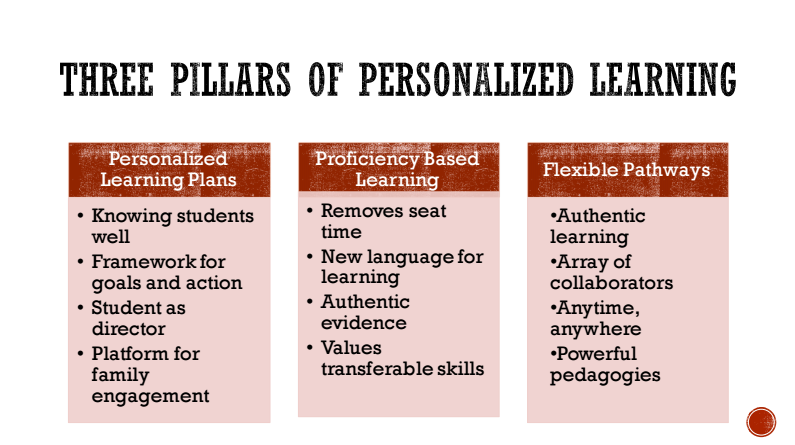
Project Based Learning and the Three Pillars of Personalized Learning

This blog post is from from Kevin Hunt, a contributor to PLP Pathways and teacher in the Swift House, Williston Central School.

We’re officially over halfway through the school year and teachers and staff at WCS are fully immersed in the PLP process and Proficiency Based Learning. These have been two huge initiatives that been met head on in our district (as well as state wide) and I think it is fair to say that most feel much more confident at the halfway mark than they did at the onset of the school year.


I strongly believe that a specific pedagogical practice and philosophy has eased the transition for many teachers: learner- centered project based learning. Project based learning is certainly not a new buzz phrase or huge paradigm shift. Three years ago, Debbie Donnelly, a current Swift House teacher and Julie Longchamp, a retired Swift House teacher (who was also a founding member of Swift House and taught on Swift for over 25 years) co-authored an article, published in AMLE, about Swift House’s approach to project based learning and its place with the Common Core State Standards, which were relatively new at the time.


As I now read the article through the lens of the three pillars of personalized learning, I am struck by the themes and connections that were written about over three years ago and how relevant they are in today’s shift in education. Themes such as student choice, engagement, authentic learning, relationships, collaboration, and flexibility, are all at the forefront of this article.


As teachers, we are bound by time and curriculum expectations. Whenever the question comes up about what teachers need more of, it is always time. When are we going to have time to do this program? How will I have enough time to work in PLPs when I have to get through all of these books in my math program? Should I commit more time to planning for lessons or assessing student work? I’m certain that we’ve all felt and heard at least some variation of these.


This seems to be the show-stopping question of any new initiative in education, yet regardless of the lackluster answer that teachers receive to these questions, they still hunker down and do their very best work for one reason: the students. We know, as frustrating as days may be, that the work we do is making a difference. One day, we may have a lesser impact on a student, but the next, we may be opening a door for another student and providing a lasting impact that will influence the rest of that child’s life.


It’s no surprise that students engage more in their work when they feel that they are valued and feel a personal connection to what they are learning. Project based learning provides an opportunity for authentic engagement, personalization, and flexible pathways to demonstrate mastery of a skill.


In their article, Debbie and Julie explain, “We have district curriculum expectations, a stipulated math program, and district-wide common assessments, but how we structure our learning experiences to address the curriculum is left up to the teams of teachers.” We are fortunate in WCS to have such trust from our administration as professionals that allows us to structure our learning experiences to best meet the needs of the students as well as the curriculum.


This allows us to partake in many team wide project based experiences including:
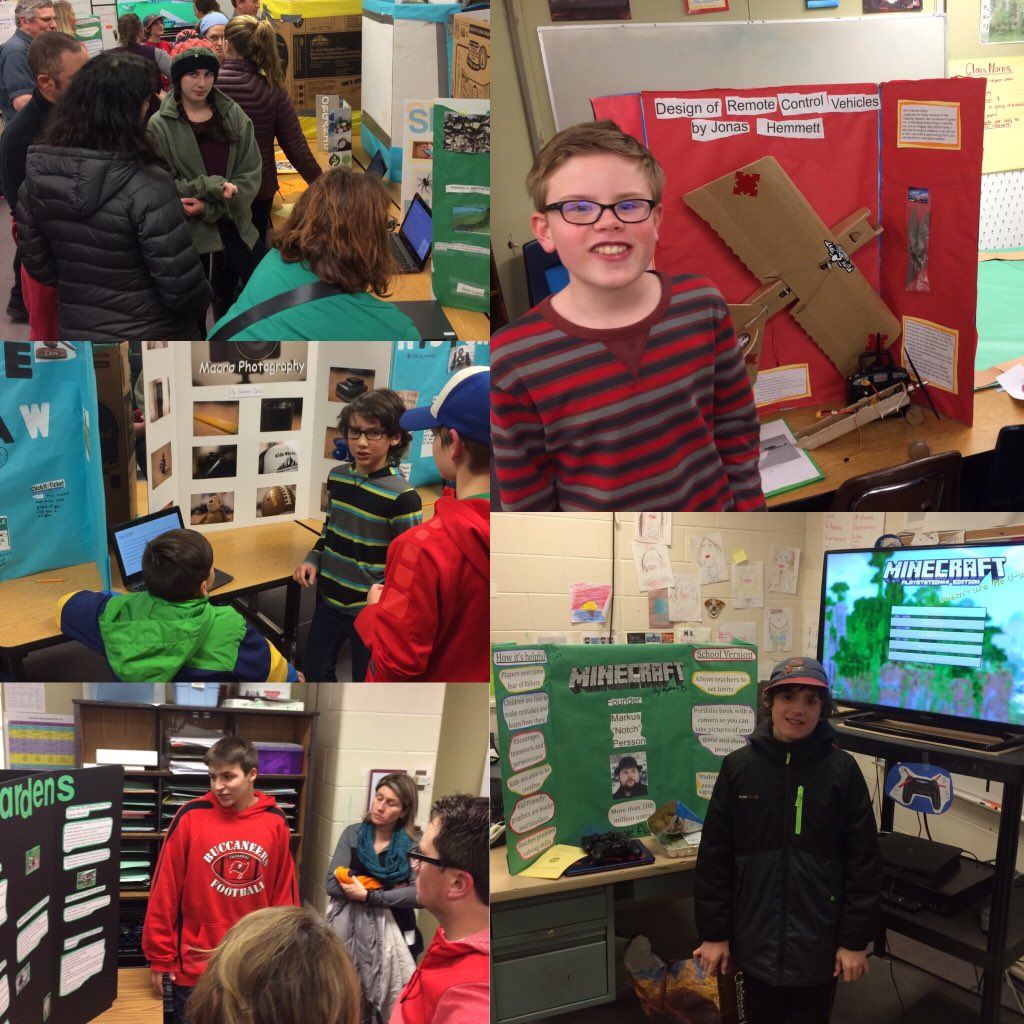
  • Independent projects- students choose a topic, complete thorough research and present out to community members at an open house.


  • Swiftville-a team wide economics simulation that involves students writing business plans, learning about tax, balancing a checking account, and ultimately creating a live and functioning business in which they make and sell tangible goods to younger students using “Swiftie” money.
  • Rube Goldberg project- students work in small groups to complete a working Rube Goldberg machine with at least ten steps with the end result of popping a balloon, or dropping a mento into a cup of cola.


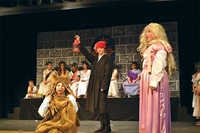
  • Theater unit-completely student led- students direct, act, work the light and sound board and make props/sets for two plays, one of which is a Shakespearean comedy every year.


There are countless content-based projects that occur throughout the school year as well that give students an opportunity to have a voice and authentic audience. As I stated above, project based learning isn’t a brand new concept and the majority of teachers are utilizing project based ideas in their classrooms every day. I was blown away at the most recent MGI conference in Burlington as I listened to a plethora of teachers from schools throughout the state discuss different ways that they are engaging their students with personalization and flexible pathways through the use of engaging projects. Now, in the age of Act 77, it’s important that we recognize the best teaching practices that we already do and draw connections to the three pillars of personalized learning.

I’ll leave you with a quote from the late Al Myers, who was also a founding member of Swift House. I believe that his words about his vision for our team will both resonate with and apply to educators worldwide:

“It is my hope that public schools will be places where children learn who they are as learners, to celebrate difference and uniqueness, to develop skills in challenging settings and in accordance with the best research on how the human brain learns, and where interpersonal problem solving and understanding is as central to the learning process as is personalized intellectual development.”

Friday, January 20, 2017

Practitioner Perspective: Weaving Goals, Reflection, and Transferable Skills into the Curriculum

This week's blog post is from regular contributor Lindsey Halman, founder and teacher on the Edge Academy Team in Essex.


Each Monday on the Edge Academy Team at Essex Middle School, we have a full team meeting, called Gathering Meeting.  This meeting serves a number of purposes - it builds community, it provides opportunities for youth leadership, it’s fun, and most importantly it is the opportunity to share the Edge Goals for the week.  These goals guide our work and provide our learners with a clear vision of what they can expect for the week.  

In order to ensure we support our learners in understanding what it means to have self-direction and communicate clearly and effectively, we ask that they share their weekly goals with a parent/guardian or trusted adult on Monday (see Link to Goals Memo Template) and write a reflective email to that same adult(s) on Friday (see Link to Weekly Reflection/Letter Template).  These opportunities allow us to ensure that there is clear communication between home and school and that our students are taking responsibility for their learning.


TEMPLATES:


Examples from Students:


VT Transferrable Skills:
Self Direction: Take initiative in, and responsibility for, learning.
Clear + Effective Communication: Demonstrate Organized and Purposeful Communication.


Notes on Goals
Deadline
Steps to Completion for the Due Date
Clear and Effective Communication
  • Share notes about goals with parents by end of Monday.
  • Filling out table.
  • Friday email home due Friday.
  • Share doc with parents on Monday.
  • Sharing follow up due Friday.
Future Projects
  • Develop two driving questions that will guide project work and research.
  • Share evidence on Protean
  • Due date: Friday 1/13
  • Listen in class about driving questions.
  • Develop quality driving questions.
  • Post evidence on Protean.
  • Due FRIDAY!
Civic and Social Responsibility
  • Field Trip on 1/13  Friday  (Patin Libre)
  • Watch video by 1/10 Tuesday be prepared for Humanities.
  • Flynn Teaching Artist on Thursday
  • Bring layers for Friday
  • Watch video about Patin Libre on own time before Tuesday afternoon.
  • Bring layers on Friday.
  • Possibly sign up to lead future gathering meetings.
PLP
  • Post evidence on Protean about one or more goals
  • Post on Protean 2 Humanities Goals.
  • Post 2 Driving Questions
  • Create a reflection
  • DUE FRIDAY.
  • Post the evidence about the various goals.
  • Write a reflection
  • DUE FRIDAY!
Humanities
  • Unit planning and Goal Setting Google Form DUE TUESDAY
  • Launch new unit
  • Choose new book groups
  • Flynn teaching artist
  • Fill out Google Form
  • Submission DUE TUESDAY
  • Prepare for performance on FRIDAY
Science
  • Windmill packet DUE FRIDAY
  • Detailed response paragraphs typed up on Google Docs
  • Fill out packet in math class.
  • Type up detailed response paragraphs.
  • DUE FRIDAY


****This week is PROJECT’S WEEK****
In order to meet my goals this week, I will….
Work hard, have perseverance, and  put in 100% effort
I might need support with…
Driving questions
Thanks for looking over my notes and I will inform you of my progress on Friday!


Examples of Friday Reflections - Weekly Letters Home

Dear Mom and Dad,

This week has been a successful week for me because I completed all of my weekly goals. For the Edge weekly goals, I completed everything except the posting of evidence to Protean (Which I am about to do as soon as I finish this letter.) I created my two driving questions for my yearly project this week. My project goal for next week is to really get into the research and take a lot of notes. In Physical Education, we got split into two groups : Basketball and Weightlifting. I, fortunately, got put in the group that starts with weightlifting. One highlight from the week was the fact that we started a new unit in Humanities and we are going to have book groups. I am really excited to know which book I will be reading. One goal for next week is to get a good grade on my algebra midterms.
Sincerely,
Jessy

Dear family,
              
                    This week has been a fun week for me. We finished our windmill task which was great to learn the engineering design process and how to build things on Tuesday we heard a speech from a teacher that went to Cuba she told us about the way they live and how it is very hard to try to make it to america and how different are schools are. In projects we are creating driving questions for our future projects. My highlight of the week was today we went to go see Le Patin Libre, they are a ice dancing group that defies ice dancing stereotype this show was very unique and I'm glad that I got to experience it. My goal for next week is to learn something I never knew before.

 Sincerely, Natasha

Dear Mom and Dad,

This week has been pretty busy, with Paige and I making our flan and going to Micaela's to work on projects. This week we also worked on writing our driving questions to help lead our project research. After finishing those, Micaela and I used a directory of LGBTQ staff at UVM (given to us by someone who visited the Edge team named Erin) to find some possible people to interview for our book. We can hopefully start drafting next week. Something else we'd like to do is meet up after school on as many Wednesdays as possible to get some extra work done.

In DTE, we've finally finished constructing our car and we've timed it on the track. It made it to the other end in about 10 seconds, and we're working to make it go faster.

In Spanish, our flan went great! Some people found it too sweet for their liking, but Senora Psaros said it was perfect. I also feel like the presentation in itself went well.

Ms. Wager (she does lessons for the woodwinds) gathered everyone in districts to practice yesterday.

One highlight from this week was making the flan with Paige. That was fun.

One goal for next week is to set up some meeting dates to interview at least one of the people that responded to the emails Micaela and I set up. We'd have to get some help from Phil and Lindsey to do that, though, and we'd also have to create some questions.

See you later!
M


Monday, June 13, 2016

Design Thinking: PLP Edition

Over the course of the year, Peoples Academy Middle Level has been actively partnering with the Tarrant Institute for Innovative Education (TIIE) around the implementation of PLPs and Proficiency Based Graduation Requirements. Due to this partnership, PAML was invited to participate in a Student Design Thinking Challenge around PLPs in the Middle Level. Collaboration occurred between students from  Hazen, Lamoille, Peoples Academy Middle Level, Crossett Brook and Shelburne Community School. Each school took a small group of students from a variety of grade levels to participate in this work.

The purpose of this collaboration was to get students from TIIE partner schools to work together to evaluate and redesign their PLPs to better meet the goals of Act 77 and improve student engagement. This collaboration will be ongoing over the course of next school year and the inaugural meeting was in May at the University of Vermont.

Lori Lisai, a current Rowland Fellow and educator from Lamoille Union Middle/ High School, facilitated the day using the Design Challenge framework to inspire creative problem solving.  Lori lead participants through the process  by having students first start with a design challenge of identifying how they learned the best individually. Students then collaborated with students from their school, narrowing the ideas to four commonalities among learning styles.  The second challenge was to creating a group handshake that exemplified all of the learning styles that we had within our group.

Now that our groups were warmed up and ready to tackle some hard thinking, our students set out to learn more about the design process and how it relates to the PLP. Students started by receiving some education around Act 77 to clarify the purpose of their work. Next,  students conducted empathy interviews with students from a variety of schools. The focus of these interviews was to share the current PLP experience at the other schools to get a sense of what the “problem” may be.
Screenshot 2016-05-18 at 4.15.09 PM.png

Once students had a chance to conduct their empathy interview, they then defined the focus of their design by creating a “problem statement.” This problem statement was structured as: Stakeholder (name) needs a way to (verb that is a need) because (insight). From these problem statements students then went to the ideate stage of the design thinking process where they brainstorm for creative solutions within their school groups.


The students from PAML went into a Post-It  note frenzy  jotting down all types of ideas around how we could improve out PLP at PAML. Here is a list of the most frequent ideas:

  • Increase Student Motivation
  • Education around Act 77 - how does setting goals, blogging and reflecting all tie into this
  • Freedom around goal setting:
    • Maybe only one goal that you care a lot about
    • Maybe a goal around a hands-on project that you are working on
    • Students working with a group of teachers to plan how the PLP work time should go - the types of activities etc.
    • More work around motivation for goal setting with examples of goals because it is hard to come up with them on demand
    • More freedom on how they set up their portfolio - maybe not just a google site.

From this ideate students went back to their schools to continue thinking about PLPs and will be rejoining at the Middle Grades Institute at Castleton State University in June to create a PLP plan that they will implement next year. These schools will continue their collaborations over the course of the school year and will be presenting their work at the Middle Grades Conference in January as a way to share growth and learn together.