Showing posts with label personalization. Show all posts

Wednesday, September 27, 2017

Building Identity Units Through the Personal Learning Framework

Today’s post is brought to you by Don Taylor, language arts and social studies teacher at Main Street Middle School in Montpelier and co-director of PLP Pathways.

The school year is in full swing and as we build our learning communities, developing an understanding of student identity and their strengths and challenges is a critical step for educators.  Most middle schools around the state have structures that work towards these goals. Specifically, teacher’s advisory, multiage teaming, and personal learning plans are all tools that can help teachers understand individual student needs, Using this knowledge to develop strong relationships with students and families can pay long-term dividends in student engagement and achievement.

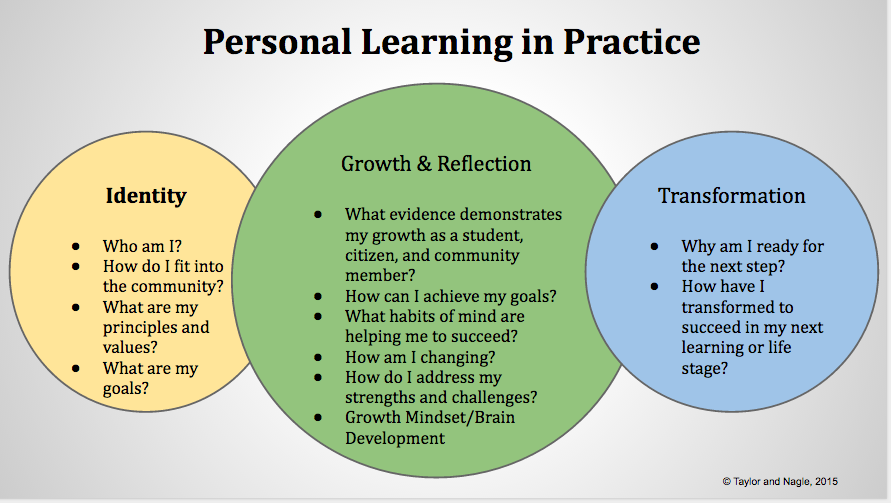
PLF.pngAnother tool that PLP Pathways has been using for the past several years is the Personal Learning Framework. Through the identification of specific stages in the student learning process, the framework can help teachers develop personalized learning activities that support positive relationships, identify key student dispositions, and inform the construction of curriculum that is relevant, engaging, and appropriate.

Personalized Learning Activities

The first six weeks of our program is built around the Identity phase of the Personal Learning Framework. Rather than have students read, write, and think about esoteric topics that might miss the mark, students are asked to evaluate their strengths and challenges, to identify principles and values as reflected through their positive relationships, and to closely observe both their immediate learning environment and cultural norms of the school and community.  

Teachers around the state have developed innovative activities that also integrate standards-based proficiencies into these activities. Samples of these lessons can be found here. The result is that teachers are gaining better insight into their students’ skill sets, leveraging that understanding into the development of strong student-teacher-family relationships, and having students post identity-based evidence onto their PLP.

The benefits of integrating proficiency-based learning activities into an identity unit is clear. Teachers gain a deep understanding of students often leading to positive relationships. Second, adolescents are engaged when activities focus on their needs, skills, and potential. Furthermore, by systematically planning identity activities, teachers can develop personalized curriculum that supports student growth and learning. As you move forward, consider using the Personal Learning Framework as a lens to develop curriculum and activities that enrich and focus your understanding of students into effective teaching practice.

Monday, February 20, 2017

5 Steps To Re-Energize Personal Learning in Your Classroom

This post is from PLP Pathways contributor Maura Kelly, teacher at Peoples Academy Middle Level in
Morrisville, VT.

Walking through the halls at school it is clear we are in the thick of it. We are past the start of the school year marathon to the holidays and are settled into our classroom routines, working hard to keep our students focused as we look toward spring. Here are five tips to re-inspire and engage your students with the PLPs:

  1. Give them an Authentic Audience - This is a great time of year to connect with other classes or across teams within your school and have students share their goals and growth to give feedback. This gives an additional audience for your students and creates opportunities for student to student partnerships and feedback around goals and growth.  Think about creating a regular meeting between the partnerships and give them a structure to reflect together.

  1. Keep Parents in the Loop -  At Peoples Academy we have our second round of parent teacher conferences in early March. This is a great time for students to show their growth over the course of the school year on their portfolio. We have them showcase their academic growth towards meeting the proficiencies and also their growth towards meeting their goals. At this point we have students adjust and set new goals for the remainder of the year. If you don’t have parent conferences now, think about how you can create opportunities where students are communicating with parents. At the Edge Academy they have students write Friday letters to share their learning and growth over the week.

  1. Genius Hour - It can feel like February is the month where you say the word goals around middle level students and they instantly tune you out. Try to get students involved in a personal interest project. This can be a way to build a relationship with students while also having them work on their growth and collection of evidence towards the transferable skills. It can be a fun way to break up the time between February and April breaks.

  1. Encourage Students to Branch Out - By February we have a good understanding of our student’s strengths and goals. This is a perfect time to try and connect students with the next challenge. For example, I have a student who had been working on goal learning how to make origami. I connected them with the director of the afterschool program and they are now leading a class teaching other students this new skill. It is also a great time to connect students with community partners or teachers in the building who may be able to mentor your student and help them reach their goals.

  1. Start Thinking About Next Year - This is a time to start thinking about the transition to next year. Can you find a time for students to sit with their teachers they will have next year to share their portfolios? Can you hook in the guidance counselors from the high school to view the portfolios?

These are just a few ideas to re-energize your personal learning activities and to get students focused on goals, growth, and reflection. Try some of these ideas to keep the learning environment fun, flexible, and productive.


Friday, November 4, 2016

The Second Pillar: Proficiency Based Learning


Today's blog is from PLP Pathways contributor Kevin Hunt. Kevin teaches grades 5 - 8 on the Swift House at Williston Central School. He can be reached @kmphunt22 on Twitter.

Recently, at a faculty meeting, the topic of discussion was proficiency based learning. We watched a comprehensive video called “What’s the Deal with Proficiency Based Learning” and chatted with colleagues about some of the big take- aways and implications for our teaching.

While I was listening to the conversation, I couldn’t help but to think about our last PLP Pathways webinar and the discussion we had about proficiencies and their place within the PLP structure. Between the video and insights I heard from my colleagues, four main points of connection stood out: growth mindset, evidence of work toward mastery, personalization, and transferable skills.

Growth Mindset

Proficiency, as it is explained in the video, is a combination of knowledge and skill. In order to demonstrate that you are proficient at something, you need to know and understand the various details associated with that activity, and you need to demonstrate that knowledge and understanding by applying it to a specific task.

Becoming proficient takes practice and assumes that mistakes are going to be made before mastery is reached. Take riding a bike for an example. You can learn about where the pedals are, how the gears work, how to apply the brake, understand where and when you should be biking...and so on.

When you go to actually apply that knowledge the first time, you may wobble around and even fall over. That doesn’t mean you stop, but rather keep practicing and build from your mistakes until you become proficient. The belief that you can achieve something with practice and learn grow from mistakes is at the core of having a growth mindset.

When we encourage students to practice and we put more emphasis on communicating their growth toward a proficiency versus giving them a score on their progress, we are building a culture that is grounded in growth mindset. Imagine getting a grade when you were first learning to ride a bike. Every time you fell off, D, F...would you continue to get up and try?

Evidence Based

Another shift that we have seen across the state is the development of the PLP and the structures around creating PLPs. Many schools have been using tools such as Google Sites and Protean as a medium for the PLP. This portfolio model allows students to create goals, provide evidence of growth, and reflect on their progress, all on the same platform.

As the video linked above says, “grading does not tell the whole story,” but rather various pieces of evidence linked to a skill, target, or standard will give you a wholesome look at a student’s progress towards mastery.

On Swift House, we have students create a goal for each of the transferable skill categories and collect evidence of growth on these goals throughout the trimester. We ask that students find at least four pieces of evidence for each goal and indicate how the evidence connects to their goals. This ongoing collection of evidence allows students to not only see their progress, but it also reminds them that this process isn’t all or nothing.

It is okay to fail and make mistakes along the way. They aren’t being assessed based on an average of grades they receive; instead they are compiling evidence from various work or activities they have done, inside or outside of school, that shows they are putting the effort in and working toward achieving a goal. This model is directly related to academic proficiencies in the classroom. We use formative assessments as communication of their work toward a learning target throughout a unit and students are able to see their growth and learn from their mistakes as they work toward proficiency.

Personalized

The end goal of proficiency is to demonstrate mastery. This is definitely a big shift for many educators as there needs to be a level of flexibility with student work and how they are demonstrating mastery. Students will have the ability to use various digital media, communication, and visual evidence to show they understand and have knowledge of the content. Unless you are specifically assessing the medium, such as writing, there is no longer a requirement for a standard essay or multiple choice quiz. That’s not to say these can’t be options, but if the end goal is for students to demonstrate mastery, then there needs to be flexibility and choice for the students to do just that.

Transferable Skills

In one of the last segments of the proficiency based learning videos, they discuss the link to transferable skills and how colleges are using proficiencies to evaluate prospective students. These transferable skills are often at the core of schools proficiency based grade requirements (PBGRs) and include: communication, creative and practical problem solving, integrative thinking, self-direction, and citizenship. These skills are present inside and outside of the classroom and the development of these skills will assist students throughout their lives.

One worry for many families, especially at the high school level, is how the move to proficiency based learning will affect their college enrollment. The fact of the matter is many colleges have been looking at proficiency-based reports for some years. Having a proficiency based report will not undermine your chances of  getting into a college, but rather it will show the college or university the various content and skills that you have become proficient in. The colleges and universities will be able to see specific mastery for a variety of content, rather than an arbitrary grade.

As we all continue this transition to proficiency based learning, it is so important to realize that there is a network of educators who are going through the same transitions. We should continue to learn from and collaborate with each other as we embrace this shift. Even having a face to face discussion with colleagues at a faculty meeting, whom I don't regularly get to see, was so valuable in that we were able to have a conversation about worries and concerns and brainstorm different solutions and ideas together. I strongly believe that this work, at the core, is going to have a drastic and positive effect on student learning and engagement.

Saturday, October 22, 2016

Personalization, Proficiencies and Flexible Pathways: Through the Lens of Education for Sustainability (EFS)

This post is from PLP Pathways contributor Lindsey Halman, teacher and founder of The Edge Academy, Essex Middle School.


What if it was possible to unite Vermont schools around the mission of creating sustainable futures for its youth, its community, the global population beyond our local and national borders, and the planet? Envision a community engaged in learning beyond conventional school hours and walls, committed to creating a socially and economically just and sustainable society.


Education for sustainability (EFS), along with the tenets of Act 77,  lends itself to learning with deep meaning embedded in it so that youth, and their adult partners, care about making change for the better. A sustainable future depends on humans figuring out how to live with one another, themselves, and the planet in a more sustainable way. Youth need access to a practice with these ideas from a very young age. What better way to practice and to develop a sense of meaning or purpose in schools than working toward answers to local and global issues, while expanding the network of youth working toward solutions toward these issue and concerns.


On September 21, 2016, partners from around the state gathered at the Coach Barn at Shelburne Farms to begin formulating questions together that will guide a year of exploration. Together, the hope is to cultivate authentic youth-adult partnerships engaged in learning toward a sustainable future. The vision for this work is for it to continue as ongoing, annually so that schools can work beyond their walls and youth can practice proficiencies in multiple settings, with diverse audiences, with real world problems driving their learning. Now is the time to leverage the excitement and focus on the opportunities personalized learning and flexible pathways provide in our communities.


This is how Cultivating Pathways to Sustainability came about and the following blog post captures the essence of this work:
Shelburne Farms Blog Post

Sunday, October 16, 2016

Change Is In The Air


Maura Kelly is a humanities teacher at Peoples Academy Middle Level in Morrisville, Vermont and co-director of PLP Pathways. She has a passion for working with young adolescents and believes in the power of a strong middle level program in developing students to be ready to face the challenges in our world today. When Maura is not teaching you can find her out skiing and biking around the state of Vermont.

Here at Peoples Academy Middle Level, as the air is becoming more cool and crisp, leaves are not the only changes that we are noticing around our school. This year the theme of our work is “practice and play” within the context of personalized learning and a proficiency based system.

We have undergone major systematic changes within our school since last year to shift towards a model we hope will allow us to reflect the three pillars of personalized learning. PAML has moved from being configured with four straight grade teams to multi-age teams where teachers will loop with students to developing stronger relationships with our students and families. We also now have Teacher Advisory everyday using the Developmental Designs Circle of Power and Respect to start out day followed by a 25 minute Academic Time every morning. This Academic Time or AT is where students can be scheduled to meet with teachers across the building based on individual needs. We are also using a web based scheduling program called Enriching Students, where we can schedule students for extra support or expansion within a content area to help our show mastery within a proficiency based learning context.

Another exciting change is the development of what we are calling Opportunity Time at the end of the every day. This is a 40 minute block where students collaborate with academic advisors to work on personal goals and projects based around our negotiated curriculum theme. The hope is this time develops into true personalized learning for all students in grades 5-8. Despite all of these changes, some things have remained the same, the importance of building a strong team identity, fostering a positive school culture and building relationships with our students. I want to highlight a few things that we have done with our students at the start of the year that help to build these youth adult partnerships.

It Begins Day One

We knew going into the start of this school year we wanted one of our key focuses to be students forming relationships within our house and developing a strong culture. This started the very first day of school starting our morning with the Circle of Power and Respect or C.P.R. building relationships, sharing, and having fun with our students. In the afternoon on the first day of school we took all of our students out onto our expansive nature tail and asked each student to find a rock that spoke to them. One that made them stop and think and one that they could carry with them.

Once back in the classroom we had all students come up with a brainstorm list of characteristics and scholarly habits that would help them to be successful this year. We then gave students the prompt: “This year I want to (be)...” and think about one characteristic or trait that they could have as a focus this school year and write it on their rock.

Finally we went around the circle in our TA and had every student share out that characteristic or trait they wanted to work on and have the collection of rocks in our classroom. It is a nice reminder to have students go back and take their rock out of our collection and carry it with them for the day as a reminder of what they are working on.


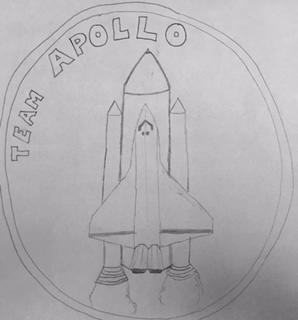
Every Team Needs a Name: Our is Apollo!

As we have restructured it gave us the unique opportunity to partner with students to create name our new teams. As a school we had thoughts that it could have been much easier for the office, families and the teachers if we had simply assigned names to the teams over the summer and crossed that item off the list. However, we recognized that for many of our students, after their grade being split between houses and possibly looping with some of the teachers from the previous year, they needed to feel some ownership and belonging to this newly assigned team so we gave the important task of naming the teams to the students. To have a small amount of continuity across the school we decided that names should fall under the theme of adventure and travel.  

Within our team we had students individually brainstorm a list of names that they liked that they felt fit under this theme. Next, we had students work in groups and negotiate with each other on what theme they felt would best represent the culture of our team with the understanding that these names will stay in the school even after they have moved on from PAML. Once student groups settled on a name, we had them create a logo for their name and create a pitch for the other students on team.

In order to make a final selection each TA had their students give their pitches and vote on the name that they felt best identified the culture of our team. Finally, during one of our weekly team town meetings with all of the students on our team, we had the names from the three TAs give their pitches to the whole team, explaining to students why we should choose their team name idea and how it helped to define our team culture.

On our team we had many really strong name ideas, however in the end the students selected Apollo to be our new team name.


Looking Ahead to Personalization

Looking back over the past month of school there are so many changes that as a school we have been trying to navigate with our students. I feel that we have worked hard to incorporate voice and choice into the decisions that we can make with our students and have been partnering with them as we are all on this journey together.

We have rolled out our PLP for the year starting with our identity work. We have has students working on a personal expression project and a bio poem that will be showcased on their “Who Am I?” page of their portfolio. I have really been making an effort to talk with students and get feedback on what they felt went well last year and changes that they would like to make with their PLPs.

Looking ahead we have also started our work using the Negotiated Curriculum Framework that is also used at the Edge Academy. Last year, after being inspired by the work at The Edge, we used this framework for the first time and found it to be the best part of the year for both teachers and students. When talking with students about their PLPs, our theme work from last year kept  coming up again and again regarding what students want their portfolios to be about. I am excited to partner with students in the development of our negotiated curriculum theme over the next few weeks and watch the changes of this year unfold.


Wednesday, September 7, 2016

Building a Learning Community

Over the next few weeks, we'll be featuring teachers throughout Vermont as they implement personal learning in their classrooms. Today's post is by Don Taylor of Main Street Middle School in Montpelier.

Across the state, teachers and students have spent the first few days of school establishing norms, getting to know their new students and creating positive learning communities. Working with the guidelines provided by Act 77, educators are venturing into new territory on three fronts: personalized learning, proficiency-based learning, and flexible pathways. The Middle Grades Collaborative and Tarrant Institute for Innovative Education have created a model for understanding these pillars of personalized learning in support of educators and students (see graphic).
Courtesy of the Middle Grades Collaborative


Team Summit at Main Street Middle School in Montpelier has focused the first few days of school developing scaffolded instruction aligned with the Personal Learning Framework. Students entering the Team Summit learning environment spent time framing their identity as individuals, students, and citizens (in real time and in the digital world) of the Team Summit community. This initial brainstorming will serve as the basis for the Identity section of student personal learning plans.

In a new development, Summit students were then asked to translate Vermont’s transferable skills into student-friendly language. Students ranked the skills in order of importance and in small groups, identified the ten most important behaviors reflected in those standards. Subsequently, students will vote on the top ten transferable skills and dispositions required for success on Team Summit. Those student-selected dispositions will then become our Team Summit Constitution.

As students continue to work through the Identity stage of the Personal Learning Framework, their understanding of the transferable skills will help them to develop initial goals. This scaffolding will allow us to begin the Growth and Reflection phase earlier than in years past. Additionally, working with the transferable skills in kid-friendly language facilitates the use of common language that can be used across personal and proficiency-based learning.


Student translation of transferable skills
Furthermore, by incorporating elements of personal learning and the PLP into the development of the learning community, teachers and students can begin building relationships based on student strengths, challenges, and goals. Building these relationships early can be a key factor in student and team success.

Tuesday, May 10, 2016

Integrating Personal Learning Plans Into Practice

At this point in the year, you've probably had some experience either 1) implementing personal learning plans in your classroom, 2) planning for PLP implementation, or 3) hearing about personal learning plans through your professional learning networks.


Assuming this is the case, let's consider four ideas that might broaden the conversation and the possibilities of personal learning plans as transformative learning tools for teachers and students.


Principles of the PLP Become Principles of Your Curriculum


On Team Summit, we're using a PLP template that incorporates seven elements of learning that we consider to be essential for middle level students.


Screen Shot 2016-05-10 at 9.16.50 PM.pngThose seven are: Identity, Community, Principles and Values, Goals, Citizenship, Evidence, and Exploration. 

Each of those elements is given space within the PLP for students to demonstrate growth and learning within the context of that element.


For example, as students build knowledge and reflect on the meaning of citizenship, why not connect that to key ideas in the curriculum? For example, how did the idea of citizenship shape the Greek civilization? What does it mean to be an "active citizen" in Vermont? How are themes of citizenship woven into your classroom?


By connecting these key ideas from the personal learning plan to classroom curriculum and practice, teachers can build greater student understanding and connection to learning.


Mentoring Programs To Build Transferable and Citizenship Skills


Schools with multiple grades can incorporate student expertise with personal learning plans and associated technology into semi-formal and formal mentoring programs. Eighth graders, having years of experience with PLPs, can easily transition into leadership and teaching roles that support younger students as they create their own learning plans. 

Mentoring programs allow students to develop better understanding of their own skills and create opportunities for leadership and citizenship within the building. As a result, equity of opportunity for all students can be created without leaving the school.


Use The Personal Learning Framework as a Narrative Structure

Screen Shot 2016-03-20 at 7.49.35 PM.png
To guide students through a personal learning experience, students are asked to use the Personal Learning Framework to identify their progress through the program. In addition to helping students understand the different elements of the PLP (see above), the Personal Learning Framework provides students with guiding questions to help evaluate their growth and learning.


As an auxiliary exercise, students can explore their movement through the Personal Learning Framework in a narrative structure. The first part of their story can be the character development (Identity), the rising action and conflicts can be the strengths and challenges exhibited through the Growth and Learning stage, and the resolution can be a modified Transformation. Drawing on their real-life experience, students can use the Personal Learning Framework to craft their unique story.


The PLP As A Technological Maker Space


Google Sites may not be the most aesthetically pleasing or easily constructed PLP platform, but once students have the basic template, they can begin constructing or “making” their PLP into a custom online platform that reflects their academic and technological growth.

Just as students are “making” in computer labs, “making” with 3D printers, and “making” with game-based modeling, these same concepts of student-led construction can be applied to Google Sites. Creativity, graphic design, and unique elements of website construction can help students learn and demonstrate a variety of tech-based skills.

Wednesday, March 23, 2016

Sterling House Implements PLPs

This blog was co-authored by Joy Peterson and Jared Bailey. Joy and Jared are teammates on Sterling House at Williston Central School. Joy is the ELA teacher and Jared is the math teacher.


Act 77 requires students to develop a PLP starting in grade 7. Here on Sterling House at Williston Central School, we are 5/6 interdisciplinary team. In the fall, we began to explore PLPs at a faculty meeting in which Don Taylor presented his PLP work to us.  


While Act 77 does not impact us directly, we took the view that we could begin to prepare our students now, by implementing PLPs in 5th and 6th grade, and help them to be familiar with the process when they reach 7th grade.


We began our PLP journey by having students write SMART goals in the first months of school.  Jared created a Google Site template, which each student then customized.  The tabs of the Site include Introduction, Goals, Evidence, Community, ELA, Math, Science, and Social Studies.


Screenshot 2016-03-16 at 10.04.10 AM.png
SMART goals included one personal goal and one academic goal.  In December, Joy created an ELA assignment called the PLP Identity Assignment.  Students were required to complete three Google Presentation slides: “Who Am I?”  “How do I Fit Into the Community?” and “What Are my Principles and Values?”  These slides were then inserted into the Introduction and Community pages.


In January, we presented our work with PLPs at the Middle Grades Institute conference at the University of Vermont.  The feedback and support that we received was fantastic.  


In February, students began to prepare for student/parent/teacher conferences.  This year, for the first time, students are beginning conferences by spending twenty minutes with their parents, explaining and celebrating their best work from the trimester via their PLP Site.  Students and parents then transition to their core teacher’s classroom for the remainder of the conference.


All of these tasks were assigned to students via Google Classroom, and had completion point values in the grade book.  During the past two weeks, each core teacher has met individually with the students in their core to go over the PLP and ensure that it is “conference-ready.”  Next week we begin student/parent/teacher conferences.  

Our hope is that the PLP is a place to set goals, display exemplary work samples, and track student growth.  We’re excited about sharing this with parents, and looking forward to PLPs becoming part of Sterling’s learning culture.

Jared can be reached via email at jbailey@cssu.org and Joy at jpeterson@cssu.org. Jared can followed on Twitter @jwbvt.

Monday, February 8, 2016

Swift House PLP History: Part 2

This week we will be featuring the second in a series of blog posts from Kevin Hunt, a contributor to PLP Pathways and teacher in the Swift House, Williston Central School. PLP Pathways encourages contributions from teachers and educators across the state who are implementing personalized learning or, like Kevin, have integrated it into their programs. This week, Kevin discusses the process for selecting and reflecting on evidence as part of the PLP process.

Portfolio and Reflection


We use Google Sites as a platform for our online portfolio/PLP. The portfolio acts as the ‘medium’ that houses the PLP, which includes the ‘process.’ Each core teacher (there are four core teachers with roughly one-hundred students divided into the four core classrooms) creates an online roster for his or her core class and uses the add-on Site Maestro to blast out the e-Portfolio template that we use. Using Site Maestro allows us to keep a record and have quick accessibility to all of our core students’ PLPs as well as add bulk collaborators if needed (ie. other teachers, guidance counselors, etc.).


Once the students receive the template, they have the option to personalize their background and font. As a personal learning plan, we want the students to have as much say and control over the process as possible. They add their goals to the various tabs and under the “Goal Reflections” tab, they create a table, indicating what their five goals are. The Goal Reflection page is created as an ‘announcement page’ (mini blog), so students can have an ongoing record of their goal reflections, which occur on a weekly basis.


We have built in a thirty minute block of time each week within our core (homeroom/advisory) class for students to work on their PLPs. During this time, students write a blurb in their goal reflections page, in which they provide input on progress they’ve made on their various goals that week, or if they haven’t made progress, they write what their next steps should be. This process keeps the students reflecting on a regular basis and creates a sense of accountability to commit to working on or at very least thinking about their goals.

Thursday, January 28, 2016

Hazen Union: Linking PLPs, Identity, and the Community

Our incredible team of Hazen Union 7th and 8th grade teachers have been working collaboratively and intentionally over the past year to create opportunities for all students to feel empowered in addressing the mission of our middle level.  "The middle level years are important in building students' social and emotional skills, as well as developing their abilities to communicate, work with others, be creative, and problem solve. By instilling these skills in our young students we give them the opportunities to express themselves and explore their interests in order to prepare them for the next stage of their lives."


Our team gathered last summer at the Middle Grades Institute with a tremendous task at hand: create a sequence of learning that blends a community-focussed interdisciplinary unit, negotiated learning, personalized learning plans (PLPs), digital citizenship, and the rollout of our 1:1 iPad initiative.  With the support of Susan Hennessey and the Tarrant Institute for Innovative Education, our middle level team developed dynamic curriculum and experiences to begin and sustain through the school year.  


In addition to this work, we have worked hard at sharing our story.  The middle level has created a blog to reflect on a variety of experiences, to which teachers and students contribute.  Our school has begun podcasting, interviewing students and faculty on numerous subjects.  And most recently, we created a video (to be shared at the Middle Grades Conference) documenting our journey:


Great things are happening here at Hazen and it is only the beginning.  Our students have built strong foundations for their PLPs, engaged in meaningful ways with their school and town communities, and developed a rich understanding of their digital footprints.  As educators, we are continually amazed by the learning and work produced by our thoughtful and skilled students.  We look forward to a great second semester and the opportunity to reflect, refine, and revise the work we have started.  


(If you have any questions, please feel free to contact me at jcraig@ossu.org or on Twitter @OldManCraig.)

Wednesday, October 14, 2015

PLPs and Parent Communications


PLPs and Parent Communications

Late September and early October bring leaf-peepers, spectacular fall foliage, and hopefully, some rhythm to the school year. Among all the activity, and depending on school implementation of personal learning plans, teachers may be considering how to best communicate their work with PLPs to parents and the community.


Parent and educator involvement in the PLP process, including easy access to, and monitoring of the PLP plan, are critical elements of Vermont's Personalized Learning Program. Here are some options to consider when thinking about introducing the PLP process to the community.

Parent Education and Planning

Developing a plan for reaching out and communicating teacher, team, and school plans about the implementation of PLPs can significantly improve parent understanding  of the process and expectations for student work.

To make this successful, teams and teachers should look at the calendar and develop a process for distributing information in a meaningful and cohesive manner. Calendar dates should also be given consideration as events such as Open House and student-teacher conferences can be excellent opportunities to keep parents and the community informed about PLP implementation and what that means for their students.

Educational resources and information for communicating to parents are widely available through the Agency of Education's Vermont PLP Process website. You can also find information on the PLP Pathways web page.

Electronic and Social Media

Depending on teacher and team social media presence, popular platforms such as Twitter, Instagram, and Google+ can be excellent venues for the distribution of PLP related material. Individual, team, or school websites can also be great places to distribute links and material to the community.

Obviously, this requires an understanding of the community's use of technology (and perhaps additional education). That said, these tools can be excellent for supporting implementation of the personalized learning program.

PLP Based Parent Conferences

Conference formats and expectations vary widely from school to school but utilizing the PLP as a foundation for student-parent-teacher conferences can be a great way to introduce parents to the PLP program. This option requires thoughtful planning and clear expectations for all parties.

Here are some thoughts to consider:

  • What elements of the PLP will be viewed or discussed in the conference?
  • What role will the student play -- leading the conference, participant, presenter?
  • What advance preparation is necessary so that students and parents can move through the conference format without confusion or questions?
  • What goals and evidence do students need to have on their PLP to most accurately reflect their academic achievement, social growth, and strengths and challenges?
  • How can the conference be formatted to maximize parent understanding of both the PLP process and student progress?
  • How will teams and teachers document parent involvement in the PLP development process?
  • How will teachers and teams develop feedback systems to identify elements of the conference experience that need improvement?

Admittedly, this is a lot of work and it requires a good deal of planning and preparation. Teams and teachers in the first year of implementation may choose to simply introduce the PLP process to parents at conferences.

Summary

Efforts to educate parents and the community about Act 77 and Personalized Learning Plans can help teachers, teams, and schools develop support for these educational initiatives. By planning ahead, utilizing existing structures where possible, and through the thoughtful implementation of new media and technology, educators can ease the transition to the personalized learning model.