Showing posts with label PBL. Show all posts

Wednesday, June 7, 2017

Project Based Learning: Engineering Edition

This blog post is from U-32 science teacher and PLP Pathways contributor Alison Gauthier.

On the Global Studies end, learners focused on various countries and policies in place to combat climate change. They learned about how the GDP of specific affected countries influences the policies people in the country are able to carry out. Learners also researched countries in the Global North versus the Global South and looked at the disparities in GDP between countries CAUSING the climate change and the countries BEING affected.

On the Earth Science end, learners engaged in scientific concepts around types of radiation received from the sun, the greenhouse effect, and the specific mechanism at play to increase the temperature of the planet.

After learning (and demonstrating understanding) about the general (and minor specific details) related to the greenhouse effect, learners were put in small groups of two or three persons. Each group was a country the learners had been exposed to during the Global Studies portion of the unit. Each country/group was awarded the GDP stated for that country. Each group had to research the specific climate change problems affecting their country, and brainstorm various solutions to each problem. Ultimately, each country chose one problem to focus on, and were charged with finding one feasible solution that they could model. T

he goal was that this model would show how that particular solution would lessen the effects of that problem. Each country had "their GDP" to use to buy materials to model their solution. Materials at the back of the room in the "supplies corner" each had an associated price. Costs of the materials were inflated to better represent the cost to make that sort of model on a larger scale. As examples, paper was $100 a sheet, a paperclip was $20, and glass beakers were $1,000 each.

Go to this site to learn more about the Earth Science unit plan and science concepts within the unit.

The solutions that learners came up with were of a great variety. Each solution had to be testable; that is, the solution had to produce a set of data. This set of data was analyzed and used by the countries to ultimately "show" that their solution produced favorable data. When countries tested a solution, they were able to determine if that specific solution did in fact produce data. If the solution wasn't data producing, or the data didn't support the expected or hoped hypothesis, the group revised the solution and re-attempted the trials to see if the revisions were favorable for the solution.

As a specific example, one country/group was assigned Bangladesh. Bangladesh's GDP is small so they sent representatives from the group to speak with USA and Germany to get outside funding. Once a donation amount was determined, it was approved by me if both parties were present and able to shake on the transfer of funds. Bangladesh's problem (as one of the results of climate change) was flooding. The solution the country chose was to make the "ideal home" to combat that problem. They designed a home on stilts that had certain unique features that would secure the stilts in to the ground and collect rain water into the home. They designed specific measurements for the home based on demographic information they collected about the people of Bangladesh. They added up the costs to make their model, and once they realized that the fundraiser enabled the construction, they built the home on stilts. They tested the home with two conditions; soil in the base and rocks in the base in order to determine the efficacy of their solution.

Here is an image of the "ideal home" for Bangladesh that they constructed to mitigate the effects of climate change that are specific to that country:

During the testing process:

Countries were given guidance as the process continued. In most groups, there was a natural delegation of responsibility based on each learner's abilities and interests.

In one group of three, for example, the group decided that one person was ultimately responsible for the design and construction, one person was responsible for the finances and data, and the third participant was responsible for pulling all items together into the presentation. In other groups, facilitation by the teacher was required to enable the ninth grade learners to each have a significant role in the project and outcomes.

Class-wide check-ins occurred at the beginning of class (75 minutes long), and then groups were free to work on their design, construction, testing and revisions as they pleased. Here is the engineering process diagram that the countries and I often referred to when discussing the progress of the solution and steps moving forward:

Each class, I would conference/check-in with groups individually. After approximately a month of group-led class time, each country presented to the class. The presentations themselves did not contribute to their overall proficiency scores for the unit (or weren't required I could say), but some students were actually able to demonstrate their proficiency on one or more of the scales through the presentation. Other learners demonstrated their proficiency to me DURING the actual group work and process. Other learners didn't yield evidence during the country process or during the presentation; those learners met with me or re-performed in a more traditional manner. Here is the cover sheet from this unit. The proficiency scales used to give learners feedback on their progress are within the cover sheet.

Following the presentations, learners received SUMMATIVE feedback on their learning up to that point in the unit. They were able to ask questions about the feedback and make plans to move forward. At that time as well, they added one or two products to their Personalized Learning Sites (PLSs) and reflected on their progress over the unit. They were allowed to choose any "products" to embed in the site. Some embedded images of their solution/design that they tested; others put a link to a Google sheet where they managed and analyzed all the data from their solution.

While learners worked on their sites, I met with students individually to conference about their learning during the unit and make steps moving forward for the students who needed to reperform. Prior to this unit, I would simply hand back summative feedback. When doing this, I would find that there was often confusion or questions that individuals would have for me. By discussing the feedback during a conference, learners felt more comfortable to ask questions and make an action plan moving forward (either for reperformance within that unit or goals for the next time they worked in a group or with a similar set of skills).

I was curious if the conferences was a more meaningful way to receive feedback, so I polled my three ninth-grade sections of Earth Science. These are the quantitative results from the polls. After each quantitative-yielding question, a qualitative question was asked.The qualitative information from the students included ideas going forward and why they preferred the student-led conferences or not.


Overall, the feedback was in favor of student-led conferences as the way to receive summative feedback following a unit. The conversations during the conferences were rich; in fact, some learners were able to quickly demonstrate that they knew something during the conference that hadn't been expressed during the group presentation or group work.

Wednesday, March 15, 2017

Project Based Learning and the Three Pillars

Screenshot 2016-07-01 at 11.29.56 AM.png


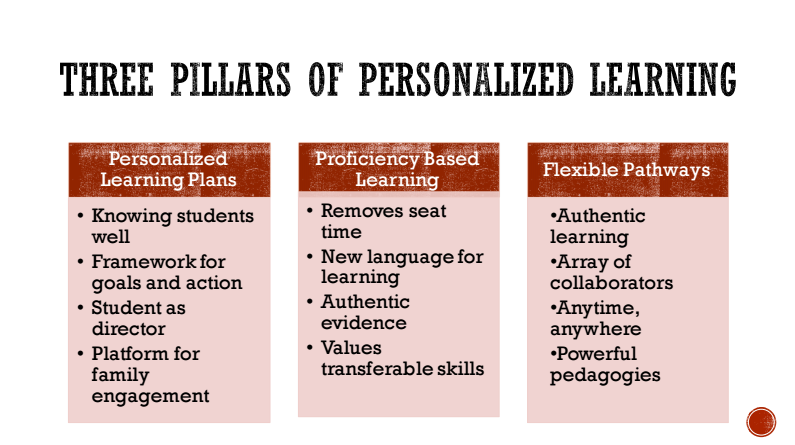
Project Based Learning and the Three Pillars of Personalized Learning

This blog post is from from Kevin Hunt, a contributor to PLP Pathways and teacher in the Swift House, Williston Central School.

We’re officially over halfway through the school year and teachers and staff at WCS are fully immersed in the PLP process and Proficiency Based Learning. These have been two huge initiatives that been met head on in our district (as well as state wide) and I think it is fair to say that most feel much more confident at the halfway mark than they did at the onset of the school year.


I strongly believe that a specific pedagogical practice and philosophy has eased the transition for many teachers: learner- centered project based learning. Project based learning is certainly not a new buzz phrase or huge paradigm shift. Three years ago, Debbie Donnelly, a current Swift House teacher and Julie Longchamp, a retired Swift House teacher (who was also a founding member of Swift House and taught on Swift for over 25 years) co-authored an article, published in AMLE, about Swift House’s approach to project based learning and its place with the Common Core State Standards, which were relatively new at the time.


As I now read the article through the lens of the three pillars of personalized learning, I am struck by the themes and connections that were written about over three years ago and how relevant they are in today’s shift in education. Themes such as student choice, engagement, authentic learning, relationships, collaboration, and flexibility, are all at the forefront of this article.


As teachers, we are bound by time and curriculum expectations. Whenever the question comes up about what teachers need more of, it is always time. When are we going to have time to do this program? How will I have enough time to work in PLPs when I have to get through all of these books in my math program? Should I commit more time to planning for lessons or assessing student work? I’m certain that we’ve all felt and heard at least some variation of these.


This seems to be the show-stopping question of any new initiative in education, yet regardless of the lackluster answer that teachers receive to these questions, they still hunker down and do their very best work for one reason: the students. We know, as frustrating as days may be, that the work we do is making a difference. One day, we may have a lesser impact on a student, but the next, we may be opening a door for another student and providing a lasting impact that will influence the rest of that child’s life.


It’s no surprise that students engage more in their work when they feel that they are valued and feel a personal connection to what they are learning. Project based learning provides an opportunity for authentic engagement, personalization, and flexible pathways to demonstrate mastery of a skill.


In their article, Debbie and Julie explain, “We have district curriculum expectations, a stipulated math program, and district-wide common assessments, but how we structure our learning experiences to address the curriculum is left up to the teams of teachers.” We are fortunate in WCS to have such trust from our administration as professionals that allows us to structure our learning experiences to best meet the needs of the students as well as the curriculum.


This allows us to partake in many team wide project based experiences including:
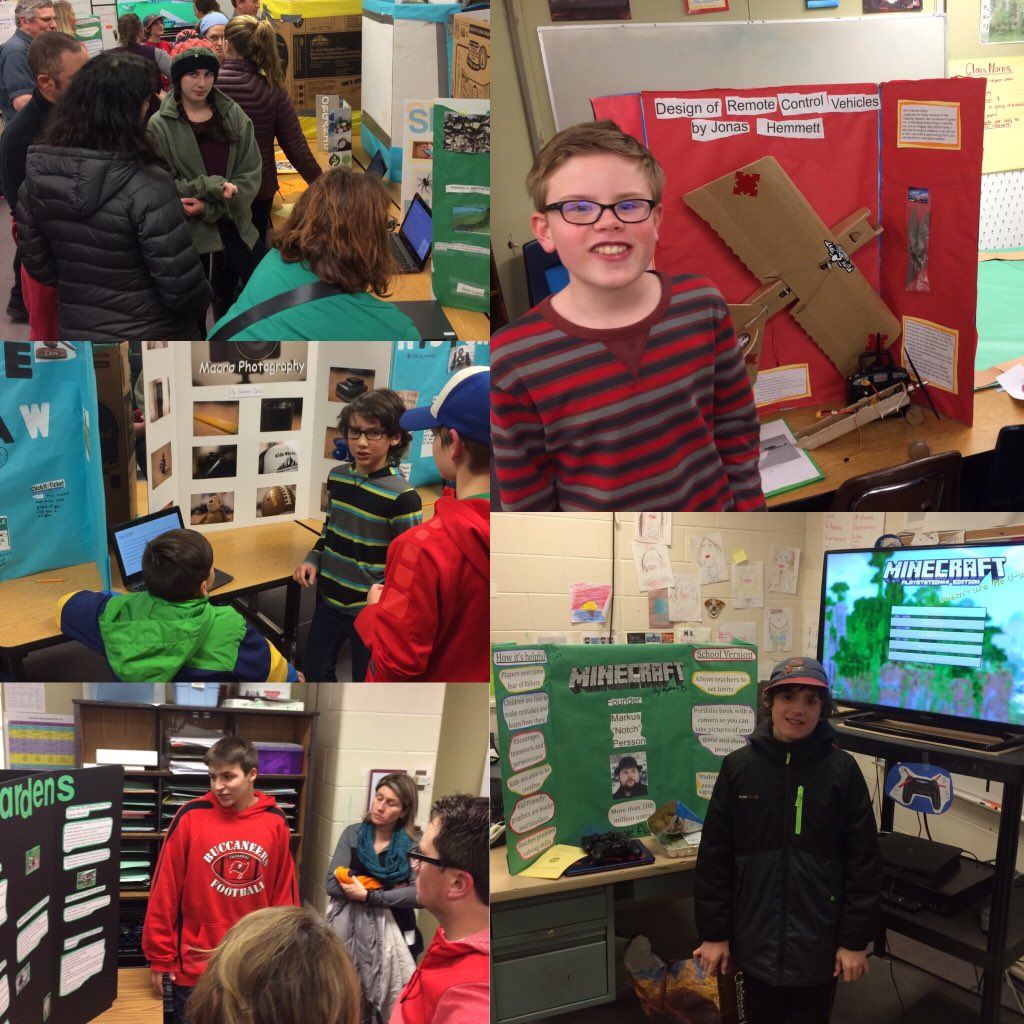
  • Independent projects- students choose a topic, complete thorough research and present out to community members at an open house.


  • Swiftville-a team wide economics simulation that involves students writing business plans, learning about tax, balancing a checking account, and ultimately creating a live and functioning business in which they make and sell tangible goods to younger students using “Swiftie” money.
  • Rube Goldberg project- students work in small groups to complete a working Rube Goldberg machine with at least ten steps with the end result of popping a balloon, or dropping a mento into a cup of cola.


  • Theater unit-completely student led- students direct, act, work the light and sound board and make props/sets for two plays, one of which is a Shakespearean comedy every year.


There are countless content-based projects that occur throughout the school year as well that give students an opportunity to have a voice and authentic audience. As I stated above, project based learning isn’t a brand new concept and the majority of teachers are utilizing project based ideas in their classrooms every day. I was blown away at the most recent MGI conference in Burlington as I listened to a plethora of teachers from schools throughout the state discuss different ways that they are engaging their students with personalization and flexible pathways through the use of engaging projects. Now, in the age of Act 77, it’s important that we recognize the best teaching practices that we already do and draw connections to the three pillars of personalized learning.

I’ll leave you with a quote from the late Al Myers, who was also a founding member of Swift House. I believe that his words about his vision for our team will both resonate with and apply to educators worldwide:

“It is my hope that public schools will be places where children learn who they are as learners, to celebrate difference and uniqueness, to develop skills in challenging settings and in accordance with the best research on how the human brain learns, and where interpersonal problem solving and understanding is as central to the learning process as is personalized intellectual development.”

Wednesday, November 30, 2016

PLP Pathways: Practitioner Perspective

Today's post was contributed by Don Taylor, language arts and social studies teacher at Main Street Middle School. Follow PLP Pathways on Twitter @PLPpathways.

Practitioner Perspective

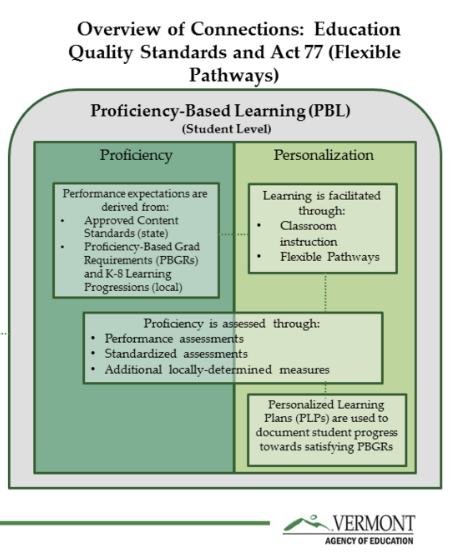
Act 77: Flexible Pathways seeks to achieve a number of important outcomes. Among these, proficiency-based learning, personalization, and flexible pathways to graduation have primary importance. This we know. Additionally, all students are expected to have a personalized learning plan that demonstrates evidence of content area and transferable skill proficiencies as they progress through their learning program.

Screen Shot 2016-10-11 at 9.55.09 PM.pngOver the past few years, teachers across the state have devoted enormous amounts of attention, energy, professional development, and collaborative effort to merge these ideas into seamless, effective, and meaningful learning experiences for students.

Ongoing Questions

Thus far, how are we doing? What strides have been made towards moving schools, teachers, and programs towards proficiency-based assessment? Has personalization been achieved and to what level are students invested in their personal learning plans? How are teachers and students involving families? The community? Is access to opportunity equitable across schools, communities, and the state?

Finally, how are teachers, on a daily basis, integrating the three pillars of personalized learning: personal learning plans, proficiency-based assessment, and flexible pathways into curriculum planning and development?

These are huge questions and over the course of the next few months, the staff and contributing writers to PLP Pathways will attempt to address them in a cohesive and meaningful way.

As part of our mission, we hope to clarify and assist educators across the state of Vermont as they tackle these thorny topics, develop strategies and pedagogies that help students succeed, and test drive resources and technologies that we can then share out to collaborative contributors.

In The Classroom

As a classroom teacher, I’m continually working to balance personalization with proficiency-driven assessment and the demands of content and curriculum. Full disclosure: my experience with personalized learning and PLPs indicates that these platforms are more motivating and engaging for students. As a result, I’m seeking to integrate personalization and proficiency-based assessment into a project-based learning environment. I’d like the PLP to be the foundation for student engagement, to capture student growth and proficiency, and to be the driver of curriculum development.

Second full disclosure: it doesn’t always work. I’m still striving to create a cohesive, student-driven curriculum that engages students while preparing them for the demands of the 21st century. This often requires a rethinking of what’s been done in the past, structured reflection, and collaborative discussions with colleagues that help solve problematic issues. Still, since working with personalization and proficiency-based assessment, I’ve started to develop some classroom survival strategies. Here are three.

Models

PLP Template.pngIt’s been really important to have models available for curriculum and personal learning plan development. The adjacent template, the current model for our PLPs, was developed over two years of trial and error. It’s not perfect, and it might not work for every team and school, but having a consistent PLP model allows me to focus on coordinating themes in the curriculum.

Curriculum Example

Because our PLP model includes a page on citizenship, we’ve been able to take traditional units on the Constitution and government and tie that more closely to student ideas about rights and responsibilities. This year we hosted a mock election prior to the presidential election. Students were able to engage with ideas about participation and citizenship which were then posted to the PLP. By collecting evidence of citizenship on the PLP, we hope to build a strong community of interested, critically thinking members, who are involved in the community.

Furthermore, asking students to reflect on these events and topics using proficiency-based assessments (descriptive writing, research skills, geography, structures of government) seems more viable when students have a school-based citizenship activity to reference.

Having a strong PLP model allows us to capture student learning and evidence while at the same time emphasizing a personal learning experience.

Feedback

Without constructive student feedback, current practices would not be nearly as developed. With the help of Google Forms, I am continually asking students for their honest and appropriate feedback regarding all aspects of personalized learning and curriculum development.

More importantly, I try to share the collected data with the students for constructive discussion.

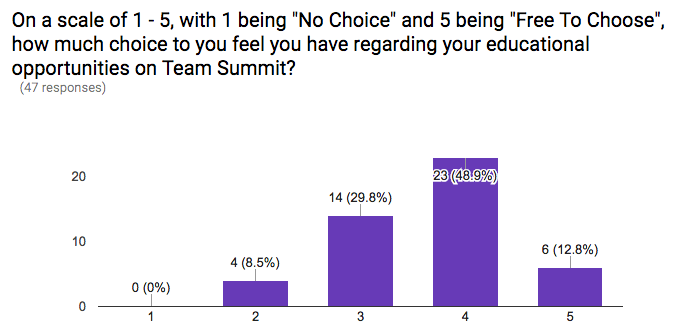
Screen Shot 2016-11-30 at 5.29.23 AM.pngFor example, after our most recent unit, students were asked about their freedom of choice within the academic offerings.

Their responses, adjacent, indicate that while they do feel they have some choice, it could certainly be improved.

This specific feedback is a great place to start discussions with students. It also helps to direct future curriculum development. Eventually, the hope is that rather than having students responding after the learning, they can help me develop choice ahead of the unit’s implementation. However, without this initial feedback, my teaching and thinking would not be as efficient.

Project Based Learning

At the middle level, the sooner I can get kids involved in engaging projects the better. Our district utilizes Understanding By Design principles and often, we attempt to have the essential questions reflected in project-based learning activities. Projects can be developed with student input and additionally, they can be structured to allow for student choice.

Once those projects are in place, students can be asked, or better yet, can choose, the different proficiencies and transferable skills that they would like to demonstrate. Those skills are then captured through the gathering of evidence on the student’s personal learning plan. Indeed, once students are engaged in project-based learning, students can be expected to be learning on several different fronts. First, they should be working on the proficiencies and skills required to be successful and second, they can be self-reflective decision-makers who can honestly evaluate the strengths and challenges of their learning experience. I view this as moving students from recipients of their education to active, engaged, independent learners.

Curriculum Example 2

Last year, after working with students to build background information about the Middle Ages, students were given the opportunity to work on a Middle Ages Independent Project. Given a choice of options regarding the demonstration of their learning, students utilized a wide range of technology platforms to present their developing proficiencies.


One student figured out how to use Google Sketch-Up to create a model of a medieval castle. Self-direction, self-discipline, ideas about audience and effective presentation all came into play. Moreover, that development and their continuous reflection was captured by the student’s PLP.


Conclusions


New initiatives such as Act 77 can have huge benefits for students and teachers. That said, they can also increase stress, cause confusion, and undermine teacher efforts to create cohesive, manageable learning experiences. Often, dialing back and reflecting on the foundation of one’s practice helps to put things in perspective. These three elements of my practice -- strong models, student feedback, and project-based learning -- are sustainable, will provide students with the opportunity for personalization and proficiency, and continue to areas of focus for my professional growth and learning.