Tuesday, October 22, 2019

Setting Goals with Students: Tips and Strategies


Introduction


“Goals can have a powerful impact on how we live our lives. They require us to engage in the entire constellation of stances (empathy, flexibility, persistence, resiliency, and optimism) as we set and work towards a specific outcome. Yet perhaps, most importantly, they provide our students with an opportunity to develop their own agency and identity in our classrooms. (Mraz and Hertz)


Last Thursday the PLP Pathways crew got together for the second PLP Pathways webinar of the year. While our main focus was on student goal-setting, we also covered the following topics:
  • The goal-setting process;
  • Family involvement in the goal-setting process;
  • Different literacy strategies that can be incorporated into student goals setting;
  • Implications of equity with regard to student goal setting.  

As with many of our webinars, our discussion incorporated a variety of classroom observations that steered us into unexpected territory. Here are some initial takeaways from our conversation.


Goals Are Supported With Relationships

Our conversation started with a discussion on when to set goals with students and the process for generating those goals. Kevin Hunt of the Swift House at Williston Central School starts the year off with Hopes and Dreams conferences.

Because he has students for four years, Kevin’s knowledge of student strengths and challenges helps him assist students in the creation of meaningful goals based on their experience in the classroom. More importantly, Kevin invites families to participate in the process. As a result, student, family, and teachers are all engaged in the process from the very start of their Swift House experience.

Through these positive relationships, Kevin and his team create meaningful goals that can be monitored by students, families, and teachers.

Common Language Helps

Throughout our discussion, the idea of common language kept cropping up. When teachers and students are using the same language around goals, transferable skills, and habits of learning, students hear the message around goals in a consistent and meaningful way. Importantly, this also allows teachers across the curriculum to help students identify evidence that demonstrates their growth and learning.

Motivation, Engagement and Autonomy


Later in the conversation, Maura Wieler of the Lamoille South Supervisory Union emphasized the importance of what author Daniel Pink identifies as key elements of good goals: Purpose, Autonomy, and Mastery. When these are lacking, we move from student-driven goals that have relevance and meaning to goals created in a culture of compliance.

Maura also identified some key skills for successful goal setting and achievement with students. These included naming and noticing. When students are demonstrating growth, learning, and skill development teachers should name the behavior and help students and their peers notice the specific behavior that is leading to success. 


Importance of Reflection


As we’ve said many times, one of the most important skills relative to setting and achieving goals is the development of reflective skills with students. Only through carefully considered reflection can students develop the metacognitive skills that will help them to not only recognize the skills that have helped them achieve goals, but reflection gives students the opportunity to move from past performance back into the goal setting mindset.


Question to consider when goal setting with your students: How might enhancing goal-directed conceptualization and action among all of our students, particularly those that have historically been marginalized, ensure that all young people have access to the support and resources to actualize their goals?


A Resource to Read


Check out this great blog post from Life Legeros, professional development coordinator with the Tarrant Institute of Innovative Education. He provides some great tips for effective goal setting as well guidelines for implementation.

Resources/Events/Related Happenings 


  • November 1: Youth Environmental Summit - YES is an annual conference for middle and high school students to learn about environmental issues and get involved in local communities. The mission of YES is to inspire, encourage, and prepare youth for a life of environmental responsibility, service and leadership by increasing awareness and knowledge of environmental issues and fostering leadership skills.

  • November 1: Vermont Afterschool Annual Conference - The Vermont Afterschool Conference is an annual event that brings together hundreds of expanded learning programs, partners, advocates, and educators from around the state for a full day of learning, networking, and celebration. Stowe, VT
  • November 6 - 8: School Reform Initiative Fall Meeting - “Renew a fierce commitment to educational equity and excellence, and together, we’ll rekindle our passion for teaching and learning. Through our collective wisdom, we’ll find the courage and comfort needed to bring our best selves back to our schools and our students. Together with colleagues, we’ll access, engage, and be challenged through sustained conversation about what matters most – improving teaching and learning experiences, through a lens of equity, to make schools better places for every learner.” Boston, MA
  • November 7 & 8: Vermont School Boards and Superintendents Association Annual Conference - From Vision to Practice: Governing and Leading for Student Success. The conference this year will focus on strategies and tools from national experts and Vermont colleagues designed to help communities design a vision for student success, and most importantly, a plan to achieve that vision. (This relates directly to previous VTLFF-supported work with developing a Vermont Profile of a Graduate, with focus on equity, sustainability and joy). Lake Morey, VT. (early registration deadline October 7)
  • November 14: Today’s Students Summit - Advance Vermont welcomes stakeholders from across the state and sectors to support the transformation of postsecondary education and training in Vermont to better serve today’s students. Leaders from Pk-12 education, postsecondary education and training, business, government, nonprofits, and philanthropy are invited to attend. 8:30-4:00. Sugarbush Resort, Warren, VT.
  • November 19: VHEC Presents: From Equity Awareness to Equity Action: Instituting Educational Justice in Vermont Schools and Communities - Workshop #2: Girls, Women, and the Persistence of Gender Oppression in Schools
  • December 5-6: Youth Climate Leaders Academy - YCLA is designed to support youth in planning and implementing projects that make a difference on climate change. Youth-adult teams from around Vermont gather to learn, plan and begin implementation of year-long climate action plans tied to their individual learning goals.
Resources


Mraz, K., & Hertz, C. (2015). A mindset for learning: teaching the traits of joyful, independent growth. Portsmouth, NH: Heinemann.

Thursday, October 3, 2019

PLP Pathways Webinar 1 -- First Take

Introduction

PLP Pathways kicked off our fifth season of professional development by teachers, for teachers, with our first webinar on September 26. We focused on the implementation of Act 77 and personalized learning with a renewed emphasis on equity.

Our conversations began where it always does -- with a discussion of relationships, identity, and how important it is to get to know our learners so that we can create a supportive, equitable learning environment that meets the needs of our students. Check out this video on relationships if you want to take a deeper dive into what we mean.

Structures that support building these positive relationships were also identified including a strong advisory program, developing curriculum with students, and the use of PLPs to demonstrate student growth and learning.

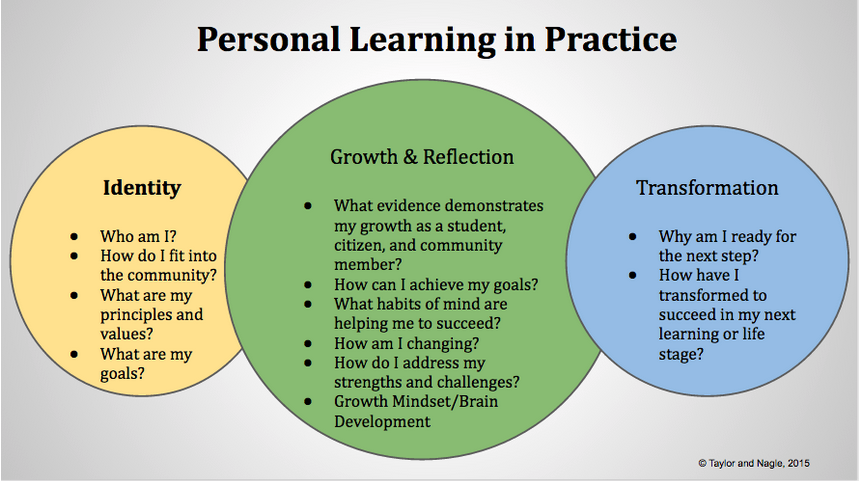
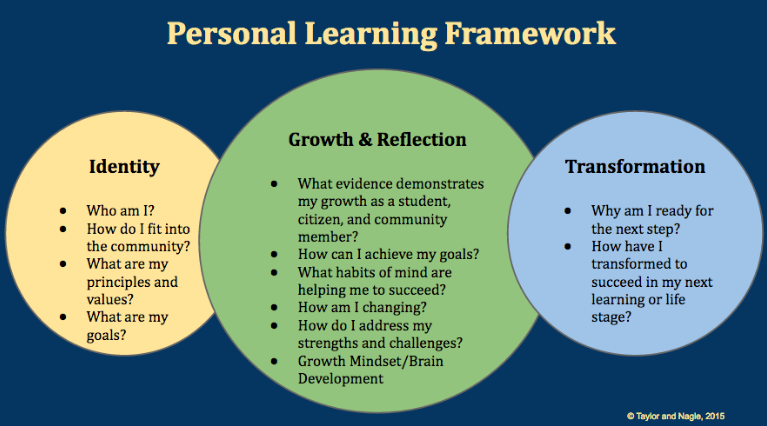
We also reviewed the personal learning framework which can be used to help educators move students through the identity--goal setting--evidence process.

As well as discussing the nuts and bolts of starting the school  year, our panel reviewed Gorski’s Equity Literacy Framework and how that can be used by educators to grow their understanding of equity literacy and how it applies to our learning environments.

Thank you to Jeanie Phillips from the Tarrant Institute for Innovative Education who has created a document that aligns Gorski’s Equity Literacy Framework with Middle Grades Competencies. The guiding questions on this document are extremely helpful.

Classroom Happenings

After our initial discussions, panelists discussed curriculum development and the learning activities being utilized to build relationships, explore identity, and develop a strong start to the school year. 

At Williston Central School, Kevin Hunt is focusing on incorporating the United Nations Sustainable Development Goals into his program.  Moreover, Kevin reminded us that he builds strong ties to student families with the Hopes and Dreams conferences that take place at the beginning of the school year. By building student and family goals into the learning process, Kevin works to address the needs of students through personalized learning opportunities.

At the Shelburne Community School, Meg O’Donnell is exploring community and student identity. By building on a sense of place and the story of the town, Meg hopes to develop discussions and an exploration of identity. A fascinating element of Meg’s work is the study of historic photographs and maps with an inquiry approach that focuses on who is missing from those documents. 


Don’t forget, our next webinar will be on Thursday, October 17th. We’ll be looking at setting goals with students and the evidence that students can use to demonstrate growth and learning.

Professional Development


Resources/Events/Related Happenings 
(Thank you to Vermont Learning For the Future for these resources.)

  • October 8: VPA Equity Summit IV - This event is one in a series of "pop-up" summits hosted by the Vermont Principals' Association, where a mixed audience of school leaders, students, educational partners, and others can dive deep into an exploration of bias, inequity, marginalization and more. The Equity Summits are part of the VPA's larger plan to build equity literacy to create and sustain bias-free and equitable classrooms, schools, and institutional cultures. 9:00 am to 2:30 pm. Jay Peak, Jay, VT. Contact: Linda Wheatley at lwheatley@vpaonline or (802) 535-8383 Register Here.
  • October 16: VHEC Presents: From Equity Awareness to Equity Action: Instituting Educational Justice in Vermont Schools and Communities - A series of free, on-demand webinars and low-cost, in-person workshops designed to prepare educators, educational leaders, and equity specialists to cultivate equitable and just learning environments. Graduate credit available. Workshop #1: Turning the Mirror on Ourselves: Equitably Connecting with and Serving Refugee Students and Families.
  • November 1: Youth Environmental Summit - YES is an annual conference for middle and high school students to learn about environmental issues and get involved in local communities. The mission of YES is to inspire, encourage, and prepare youth for a life of environmental responsibility, service and leadership by increasing awareness and knowledge of environmental issues and fostering leadership skills.
  • November 1: Vermont Afterschool Annual Conference - The Vermont Afterschool Conference is an annual event that brings together hundreds of expanded learning programs, partners, advocates, and educators from around the state for a full day of learning, networking, and celebration. Stowe, VT
  • November 6 - 8: School Reform Initiative Fall Meeting - “Renew a fierce commitment to educational equity and excellence, and together, we’ll rekindle our passion for teaching and learning. Through our collective wisdom, we’ll find the courage and comfort needed to bring our best selves back to our schools and our students. Together with colleagues, we’ll access, engage, and be challenged through sustained conversation about what matters most – improving teaching and learning experiences, through a lens of equity, to make schools better places for every learner.” Boston, MA.
  • November 7 & 8: Vermont School Boards and Superintendents Association Annual Conference - From Vision to Practice: Governing and Leading for Student Success. The conference this year will focus on strategies and tools from national experts and Vermont colleagues designed to help communities design a vision for student success, and most importantly, a plan to achieve that vision. (This relates directly to previous VTLFF-supported work with developing a Vermont Profile of a Graduate, with focus on equity, sustainability and joy). Lake Morey, VT. (early registration deadline October 7)
  • November 14: Today’s Students Summit - Advance Vermont welcomes stakeholders from across the state and sectors to support the transformation of postsecondary education and training in Vermont to better serve today’s students. Leaders from Pk-12 education, postsecondary education and training, business, government, nonprofits, and philanthropy are invited to attend. 8:30-4:00. Sugarbush Resort, Warren, VT.
  • November 19: VHEC Presents: From Equity Awareness to Equity Action: Instituting Educational Justice in Vermont Schools and Communities - Workshop #2: Girls, Women, and the Persistence of Gender Oppression in Schools
  • December 5-6: Youth Climate Leaders Academy - YCLA is designed to support youth in planning and implementing projects that make a difference on climate change. Youth-adult teams from around Vermont gather to learn, plan and begin implementation of year-long climate action plans tied to their individual learning goals.
  • For more opportunities, here is a link to a Vermont Professional Learning Collaborative Calendar, hosted by the VPA
SHARED RESOURCES and OPPORTUNITIES:


Thursday, September 26, 2019

PLP Pathways: Equity Literacy, Act 77 and Professional Development

This past summer, over 125 middle-level educators gathered at the 2019 Middle Grades Institute which focused on the theme of Advancing Equity in the Middle Grades.  PLP Pathways is committed to sustaining the focus of Advancing Equity in the Middle Grades through the webinars and blog posts this year.


Using the Equity Literacy for Educators: Definitions and Abilities as our conceptual framework, we will be keeping equity centered in our work this year. “Equity literacy prepares us to see even subtle ways in which access and opportunity are distributed unfairly across race, class, gender identity, sexual orientation, (dis)ability, language, and other factors” (Gorski). 


Personalization, when done right, is a truly equitable practice.  True personalized learning facilitates more equitable outcomes by promoting success for more students. By designing classroom practices that embrace individual differences, personalization can add depth to the learning experiences of all students. 


What You Can Expect


Each webinar will have a theme that is connected to one of the four equity literacy abilities. Our first webinar’s theme is Starting Up: Building Relationships and Creating a Culture for Personalized Learning which is connected to the equity literacy ability recognize.  


In each webinar we will be using the Equity Literacy Framework to share ways that we are practicing building the equity literacy ability in our classroom and schools within the context of the personalized learning theme. 


We will share personal stories and experiences, resources to support you and your next steps, as well as provide discussion questions to use within your team meetings. Additionally, once the webinar is posted online to the PLP Pathways YouTube channel, educators can receive an hour of professional development credit by watching the video and completing a short assessment to earn a micro-credential.


This approach will support you and your team in the integration and development of equity literacy abilities as you implement the personal learning framework.

We hope you can join our fifth season of webinars as we
support educators implementing Act 77, developing
equity literate practices, and sharing our resources and
experiences to support Vermont’s students. 

Thursday, September 12, 2019

PLP Pathways: Refocusing on Equity, Act 77 and Professional Development

With a new school year underway, PLP Pathways is excited to begin our fifth year of supporting Vermont's educators in the implementation of Act 77. 

This year we will be strengthening our core professional development, offering new opportunities for growth and learning, and paying particular attention to issues of equity. Additionally, we hope to continue bringing examples of the great work Vermont's educators are doing as they work to implement personal learning plans, proficiency-based learning and flexible pathways.

Webinar Series

This year we will again be offering a monthly webinar series to discuss issues related to the aforementioned pillars of personalized learning: personal learning plans, proficiency-based learning and flexible pathways. One change is that we will be utilizing Zoom for our webinar platform. Rather than live streaming our work on YouTube, each webinar will be a collaborative meeting open to viewers.

Interested parties will be able to join the conversation live, access the recorded conversation through Zoom for two weeks after the event, or visit our YouTube channel to revisit episodes related to your work. Our first webinar will be on September 26th and we'll focus on building relationships with students.

Equity

As personalized learning and Act 77 have evolved, issues of equity have come front and center. Educators, school systems and communities across Vermont are taking on these issues to ensure that all students have access and opportunity to the learning experiences that will support their growth and learning. 

Throughout the year, we will be discussing these issues, identifying resources to help educators and reflecting on how issues of equity impact us all. 

Many educators use the first few weeks of school to build relationships with students and to explore issues of identity. PLP Pathways will again try to provide you with resources developed by educators in the classroom. 

For example, check out this identity learning activity from practitioner Matthew McCormick. These resources and more can be found on our PLP Pathways website.  We will also be providing viewers with short videos throughout the year that deal with specific topics related to Act 77. 

These will be hosted on our YouTube channel in order to provide support, ideas, and innovative thinking for those seeking to improve their practice.

Professional Development

Finally, PLP Pathways will be continuing to offer professional development hours through a micro-credentialing program. Viewers who watch our program can complete a short Google Form and receive 1 hour of professional development credit and a certificate of completion. 

Additionally, PLP Pathways offers personalized consultations and support for action research in the field.

It is going to be an exciting year and we look forward to re-connecting with the hard-working and committed educators of Vermont. Have a great year!

Monday, June 17, 2019

2018-2019 In the Rearview Mirror

Today’s post is brought to you by Don Taylor, language arts and social studies teacher
at Main Street Middle School in Montpelier and co-director of PLP Pathways.

Introduction
The PLP Pathways collaborative recently completed its fourth year of supporting educators implementing Act 77 across the state of Vermont. In the chaos and frenetic activity of the final days of the school year, it seems wise to take a pause, reflect on our growth and learning, and think about our mission and work with educators.
Our final webinar on June 13 focused on how teachers can use a variety of instruments to reflect on their practice and begin the process of adapting and evolving in preparation for next year (after a long and relaxing summer!). Here’s a breakdown of some of the key ideas that developed from our discussion.
Reflection
Developing structures to reflect on growth and learning, both as an individual and organization, is a key part of finishing the school year. Just as we ask students to provide evidence of their growth and learning, educators should reflect on their personalized learning goals for the year, evidence that demonstrated achievement of those goals, and perhaps some of the new thinking or ideas that emerged from practice, professional development, or collaboration with colleagues.
Student Feedback
Gathering student feedback in a systematic way is a critical element of evaluating programming. For example, every trimester we give our kids an exit survey targeting our organizational methods, personalized learning plans, student voice and choice, and general questions about our learning community. Often, that data is then shared back with students in order to gain a deeper understanding of the student experience on our team.
A new resource that I’ve been using to strengthen exit surveys is from Panorama Education. The student survey has excellent questions that can allow teachers to really drill down on elements of their practice that they would like to evaluate.
Equity
Evaluating personalized learning programs, systems, and the organization of your learning community from a perspective of equity can be extremely valuable. Coupled with the collection of data as mentioned above, using an equity lens can help uncover practices, systems, or material that may be reinforcing inequity.  Voices of Vermont’s Children, in their publication Education Matters: The Impacts of Systemic Inequity in Vermont details a variety of data that highlights inequities in schools; the report also identifies a variety or strategies and questions that educators can implement and pose that can redress these issues.
Another excellent tool to use as a lens for reflection is Paul Gorski’s Equity Literacy Definition and Abilities. Gorski identifies specific abilities that educators can employ to address inequity and make personalized learning experiences for children more equitable, fair, and just. Again, reflecting with these tools is one way of evaluating  your learning programs. It’s not easy, but it can have a big impact on developing an effective and equitable practice.
Strengthening Relationships
One new tool developed by the Vermont Learning For the Future is a series of rubrics that can help educators evaluate their programs through the lens of adult-student partnerships. The rubrics focus on advisory, community programs, integrated learning, feedback, restorative practices, and student governance. I’ve found them to be incredibly helpful for framing my thinking on these subjects. They provide outstanding benchmarks and proficiency criteria which I can easily develop into personal and program goals.
Final Thoughts
Many of you are already enjoying the first days of summer; some might be engaged in professional development; others making plans for next year. Wherever you are in your educational journey, consider a specific time and specific tools to engage in reflection. Evaluating your personal learning efforts and implementation, gathering evidence related to your work, and integrating those findings into your future practice is worth the effort.

Monday, May 13, 2019

PLP Pathways and Proficiency-Based Learning


In April, PLP Pathways participated in the Proficiency-Based Learning forum co-hosted by Vermont Learning for the Future and Up for Learning. The goal of the forum was aimed at elevating a strengths-based, solution-oriented dialogue about making the transition to PBL in Vermont. The forum provided PLP Pathways an opportunity to reflect on the ways that we have shared in the learning of practitioners from around the state as we work to implement proficiency-based learning and how the personal learning framework supports the shift to PBL.

Three Pillars of Personalized Learning
Personal Learning Plans (Identity/Engagement/Evidence of Growth)


Personal Learning Plans are a critical tool to help educators know students well and to help students develop and achieve clear academic and social goals in order to be productive and socially responsible citizens. The thoughtful development and implementation of PLPs engage students with a variety of learning activities and curriculum connected to their interests. This builds positive relationships with students, increases teacher understanding of students’ strengths and challenges, and provides students voice and choice in the curriculum and help to understand students’ educational aspirations.
 Examples
Proficiency-Based Learning and Assessment
(Evaluating What is Most Important)
Proficiency-based learning requires that students, teachers, and families clearly understand the learning expectations and standards that students must achieve in order to be considered proficient. In addition to academic skills, proficiency-based learning systems separate academic achievement from habits of learning (transferable skills).

Key features of proficiency-based learning include the use of formative assessment, consistent and clear feedback to students, and the opportunity to retake and revise work submissions in order to achieve proficiency. Ideally, students are not measured by the time spent in class but rather their demonstration of proficiency across the curriculum. In proficiency-based learning systems,  “students can demonstrate learning progress and achievement in multiple ways through differentiated assessments, personalized-learning options, or alternative learning pathways.”


Flexible Pathways
(Creating Meaningful Diverse and Equitable Learning Opportunities)

Educators must consider the skills required for students who will be moving into a high school environment with a broad range of academic opportunities available to students. Work-based learning, community internships, dual enrollment, and early college are all elements of Act 77.


Using proficiencies to monitor and assess student learning allows students and teachers to explore these learning opportunities with a common language for assessing performance. When learning expectations are clearly communicated, students, teachers, families, and extended learning providers can ensure student learning and achievement. Additionally, proficiency-based learning is a key component of effective project-based learning curriculum.