Monday, September 24, 2018

The Importance of Relationships


This blog post is from Kevin Pioli-Hunt, PLP Pathways contributor and teacher in Swift House,
Williston Central School.

This job is all about relationships. This was one of the first things I learned from my mentor teacher when I was student teaching and it has been a guiding force in my approach ever since. There will always be things that are out of the teacher’s control: new initiatives, changes in curriculum, changes in personnel. One thing that can remain constant, however, is the level of trust and rapport we build with our students year in and year out. Here are some tried and true methods we use to build relationships on Swift House:


Early Connections with Families


Summer Mailing
We are fortunate to be a 5th-8th grade team, so we have ample time to build strong, lasting relationships with students and families. Every summer, we send out a summer mailing to our new families and returning families. This letter consists of introductions, updates about the teachers’ professional growth over the summer (along with the fun!), core placements, student mentor/mentee pairs, and general logistics about the coming school year. For our new families, we also provide a student profile document for the upcoming Hopes and Dreams conference. Our hopes and dreams conferences occur a few days before school starts, and give us a chance to learn about our new core (homeroom/advisory) students. We also  begin the process of setting up some PLP goals before the school year even begins. It’s the first of many opportunities for our new students to not only feel connected with our team, but to also have a chance to advocate for themselves and their needs.


Mentor/Mentee Breakfast
The day before school starts, we have our 7th and 8th grade volunteer mentors come in for a mentor/mentee breakfast, which we host on Swift House. This, more times than not, is the mentor and mentees’ first interaction with one another, so we try to keep it as light and fun as possible. Mentors are given a questionnaire to fill out with their mentees, to get to know one another and help the conversation along, and then each of the four core classes do ten minute rotations where we play some fun and engaging team building games. We end the day by bringing all the mentors and mentees together in our Kiva space and play “signature squares” as one final getting-to-know-you activity before we leave.


Team Building


1st week of school
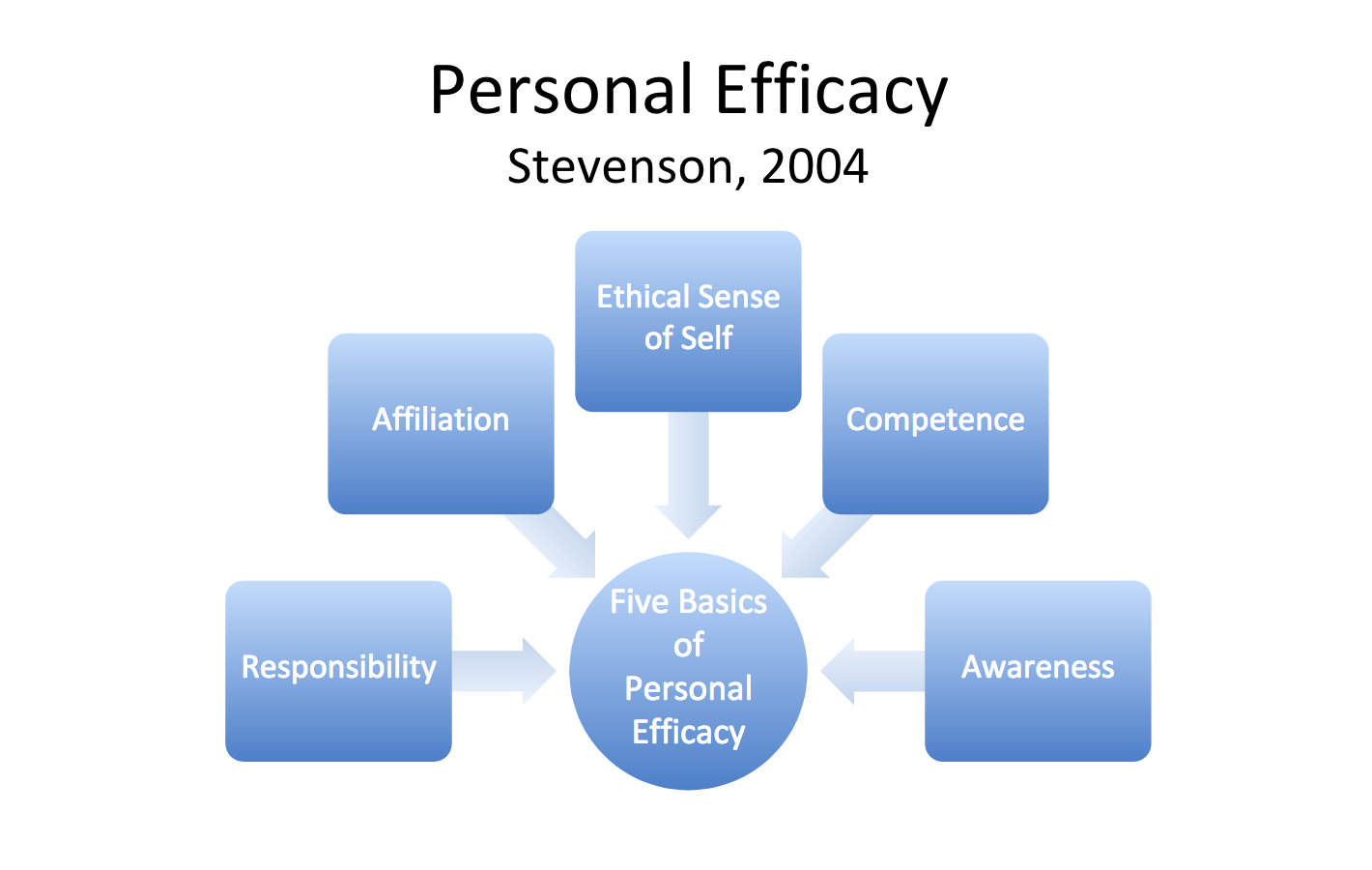
We embed team building activities (silent birthday line up, captain’s coming, shoe relay, play doh pictionary, etc) for the first 3-4 days of school. This happens in both small core (advisory) group settings within our morning meeting and large group as a whole team. We utilize our life studies and literacy blocks in our schedule  to make time for these team building activities. During our math classes, every teacher on Swift spends time focusing on growth mindset lessons(from youcubed.org) and establishing a classroom environment that values mistakes and learning from one another. We also make time early in the school year for students to complete some identity work that will go on their PLP. This year we used Chris Stevenson’s 5 Personal Efficacies as a foundation for our identity work. Students created a coat of arms in which they reflected on their competence, responsibility, awareness, affiliation, and sense of self.


Campout
An ongoing Swift tradition is our campout that happens on the second week of school. Every year, we bring students on an overnight camping trip to Grand Isle State Park. We begin planning for this on the first day back by delegating 8th grade campsite leaders. Once the campsite leaders are established, the leaders all meet with a teacher and begin making campsite groups. We begin with matching the mentors and mentees to help continue to build those relationships. After groups are made, they begin their campout planning. The students plan everything. They are in charge of collaborating and sorting out who is bringing what for dinner, campfires, tents, snacks, drinks, etc.


Once we arrive at camp, students work together to set up their tents and organize their sites and then we have a schedule of small group rotations and large group team building activities. There is of course freetime built in to swim in the lake or play and hang out with friends. The night ends with a Swift community dinner, where families and Swift alumni come to join us. This is an amazing opportunity to meet and socialize with the new families and have new parents meet returning parents and students. After dinner, we all have a bonfire and each of the campsite groups put on skits that they’ve been rehearsing. We end the night in a peaceful manner with candles and sharing what we are thankful for. This began in 2001. The Swift campout was the week after 9/11 and the facilitators held a candlelight vigil and had students and families share what they were thankful for in their lives. We have continued this ever since. For me, this moment at the campout when we are quiet with our faces illuminated by the flickering flame from the candles and sharing what we are thankful for, is when everybody feels what it means to be a member of this family.


Whether you are part of a team that has relationship building built into the culture, or brand new to the profession, it’s important to remember that making any effort to build relationships with your students will have a positive and lasting impact.

Monday, August 27, 2018

PLP Pathways: Supporting Teachers and Act 77

Today’s post is brought to you by Don Taylor, language arts and social studies teacher at Main Street Middle School in Montpelier and co-director of PLP Pathways.

Introduction
The PLP Pathways collaborative is excited to continue our work supporting teachers implementing Act 77 for a fourth consecutive year. For those not familiar with our organization, PLP Pathways is an educator driven professional development community created to support the implementation of the three pillars of personalized learning (personal learning plans, proficiency-based assessment, and flexible pathways) and the development of innovative curriculum for Vermont.

You can follow us on Twitter, join or view our webinars on YouTube, or access relevant resources through our website. If you’ve got information or material that you think would help kids, teachers, and communities, let us know and we’ll spotlight those resources.

Building Student Relationships
As students, teachers, parents and the community approach the 2018-2019 school year, it’s always a great reminder to consider the relationships that, as educators, we will be creating and renewing over the first days, weeks, and months of the school year.

Are the “get to know you activities” planned for the first days of school designed to support students transitioning into the new school year? Are the activities linked to broader relationship building that will enhance the learning community? Are any of the planned activities designed to increase understanding of student needs relative to proficiencies and the development of flexible pathways? Can we begin building positive relationships with students that will  be a foundation for the development of independent learners capable of directing their own educational journey?

Thoughtfully planning these initial activities with the idea that resulting relationships, created over the initial part of the school year, will create dynamic learning communities can be the difference between a good year and a great year. One tool that we’ve used over the past few years to help develop this process is the Personal Learning Framework.
The Framework breaks down the student’s journey through the learning experience into three phases: Identity, Growth and Reflection, and Transformation. The Identity phase focuses on introductory activities that reveal student interests, strengths, challenges and goals. Exploring these in an intentional and purposeful way can help educators who are building curriculum, designing personal learning plans, and intent on building great student-teacher relationships. Find out more about some innovative Identity activities on our website.
Building Professional Relationships
Through the course of our work we’ve found that positive classroom relationships are enhanced through the development of supportive professional relationships. PLP Pathways thrives in large part due to our work with other organizations. These include support from the Middle Grades Collaborative, collaboration with the Tarrant Institute, resources from UP for Learning, and the innovation of Vermont Learning for The Future. As the new year begins, we encourage you to reach out to the numerous professional organization available that will help support your work, create positive relationships, and lead to a rewarding and successful school year. PLP Pathways looks forward to this work, to strengthening our relationships, and to supporting all your efforts. Good luck on the first day of school and keep in touch!

Saturday, June 30, 2018

PLP Pathways: It's a Wrap


For PLP Pathways, today marks the start of summer. Yesterday, we finished the 2017-2018 school year with the closing of the Middle Grades Institute at Castleton University. As always, the Institute gave us the opportunity to reconnect with friends, colleagues and committed educators from across Vermont.

Supported by the Middle Grades Collaborative and the Tarrant Institute for Innovative Education, the Middle Grades Institute focuses on those principles and practices of middle level education that foster student growth and learning.

This year, the Institute used Chris Stevenson's 5 Efficacies: affiliation, ethical self, competence, responsibility, and awareness to frame how we engage middle level learners.


Coupled with existing pedagogical frameworks, these efficacies help understand middle level learners and give us touchpoints to consider as we continue developing our practices.

A key overarching theory underlying these efficacies continues to be the development of student voice and choice to increase engagement. Over and over again we hear the importance of engaging students by empowering them in the educational process. For a case study in how this can be accomplished in the high school classroom, check out this reflection by Alison Gauthier of U-32 high school.

Moving forward, Stevenson's 5 Efficacies will be woven into our work as we continue to support innovative and engaging teaching throughout Vermont and beyond.

To our contributors, supporters andall teachers and students who have worked so hard this year, have a great summer. 


Monday, June 4, 2018

The emPOWERment of Authentic Audiences
Written by Alison Gauthier, Dawn McConnell & Hope McConnell

Vermont’s Act 77 encompasses three pillars - Personalized Learning Plans, Flexible Pathways, and Proficiency-Based Learning and Assessment. Fluid across the three pillars, authentic audiences support students with both accountability and feedback as they grow and learn.

This spring, ninth grade students from U-32 experienced authentic audiences when presenting about their Earth Science unit related to Climate Change and Engineering. The unit was designed with Act 77 specifically in mind - a flexible process and product to reach a common set of proficiencies on the Sustainability and Engineering Science standards.


Based on interest, students were organized in “country” teams of two or three persons; each team represented a country affected by climate change. From Haiti and Bangladesh to the United States and Germany, each team had to determine the specific ways that climate change was affecting their area of the world - and determine feasible solutions to either adapt to, or mitigate, these effects. Each country had a budget (the country’s actual GDP per capita) to purchase items from the engineering store to design a prototype solution for their specific problem. Items at the store had inflated prices - for example, a piece of paper was $100 and a pipe cleaner was $50. Countries with a smaller GDP per capita were forced to think creatively about their project, or get grants from other, more-wealthy countries.


The summative of the unit were the country presentations where students had to “sell” their prototype to other countries. Each person was granted $20,000 from the UN to buy prototypes that their specific country needed, and these individuals were accountable to their team and to other countries because they were attempting to “sell” their specific prototype to others. To make their prototype more appealing, teams had tested out the prototype and analyzed data in order to yield evidence that this would indeed work for other countries. From slides to posters to short movies, no advertising scheme was the same.
This was the first authentic audience that students in this class experienced this year in Science.     
Shortly after the country presentation, Hope McConnell,
a 9th grader at U-32, presented to a different authentic audience. U-32 received a Vermont Academy of Science and Engineering (VASE) small equipment grant earlier in the year to purchase engineering supplies for the store. These included several 3D pens, a soldering kit, and an introductory coding kit. Hope presented to legislators and VASE partners at the State House in Montpelier, describing her country’s climate change project, and explaining how the VASE-supplied 3D pen enabled her team to create a floating greenhouse.
Hope’s slideshow can be found here. As the teacher watching Hope present to legislators about climate change, I was struck by the level of conversations she engaged in with adults and other teens in the room. Hope also had background from her ninth grade Global Studies class related to the state and international policies related to climate change, and I quickly saw the conversations progress from discussing her project to discussing international policy. Hope talked animatedly about “mitigation” and “adaptation” and how her assigned country in the “Global South” is suffering from effects largely caused by the “Global North”. At one point, Hope encouraged legislators to push specific policies that would help Vermont mitigate its emissions.

Later in the spring, Hope McConnell (9th grader), Iona Bristol (9th grader), and Maeve Hoffert (8th grader) presented at the ECET2 conference in Hanover, New Hampshire. Founded by teachers, for teachers, ECET2 stands for Elevating and Celebrating Effective Teaching and Teachers, and their mission is to bring exceptional educators together for meaningful collaboration and professional development.
Hope, Iona, and Maeve gave a presentation about the climate change unit to a small group of teachers from Vermont and New Hampshire. They explained how they were able to personalize their product and process, while still showing proficiency on the various scales. The presentation was engaging (they had the teachers try out an engineering problem) and informative. The teachers were interested in how the students were able to show their voice through the project. One teacher from New Hampshire asked each of them to explain something that went well in the unit, and something they would change for the future. As their teacher, I was taking notes of their responses as a form of feedback to make the unit better in the future.

At the conference, I was again impressed by how the students acted with this new audience. When watching other presentations by teachers around New England, they asked questions, were engaged, and came up to me after with ideas for our class and school. “Do you know how competency-based learning is happening at this school in New Hampshire?” Iona asked me. “Our principal needs to hear about this!”

Dawn McConnell, Hope’s mother, stated this following the ECET2 conference: “I was surprised at how much Hope enjoyed attending the teachers' conference with you. She had a great day and came away with a greater appreciation for what teachers do. I think it was the first time that she was exposed to what goes into the planning and thinking behind lesson planning. She was impressed by the care and discussions of the teachers regarding how to present information and engage students. She told me that she even spoke up in the one of the teacher sessions to offer her perspective on reaching students who are struggling in class. It occurs to me that these kinds of interactions are beneficial to the teachers and the students. I'm wondering if there might be other opportunities for students and teachers to share their struggles (and successes) with each other in a similar format. It certainly helped my daughter to have renewed respect for teachers and gain an understanding of their perspective.”

During the conference and following these words from Dawn, I realized that exposing adolescents to authentic audiences is actually an act of empowerment. By learning about various perspectives and understandings, students walk away with more tools in their learning toolkit. Authentic audiences not only benefit from the knowledge, skills and questions of our students, but our students benefit from the insight, inquiries, and opinions of others.

Sunday, May 13, 2018

Teen Health Week at U-32: Student Involvement in Health & Wellness
Written by Meaghan Falby & Alison Gauthier

Vermont’s Act 77 encompasses three pillars to support 21st century learners: Proficiency-Based Learning and Assessment,Personalization/Flexible Pathways, and Personalized Learning Plans. As schools across Vermont work to effectively and sustainably implement Act 77, there are many questions that come to mind. Are we offering learners flexible pathways to achieve their personal goals? How can students pursue their interests, while, at the same time, show proficiency of district-chosen standards and skills? How can we provide authentic audiences so that students can share their learning with other peers and trusted adults?
In an attempt to make progress on these questions we are grappling with, faculty, staff, and students at U-32 organized Teen Health Week this past spring. Meaghan Falby, a High School Health and Family Consumer Science teacher at U-32, first learned about National Teen Health Week from a Twitter post (@RTwithDrOffutt) by Dr. Offutt, a physician and teen health advocate in Philadelphia. National Teen Health Week originated in Pennsylvania and was the first statewide initiative in the US focused around the health and wellness of adolescents. More information about National Teen Health Week can be found here.
Meaghan Falby emailed the faculty and staff at U-32 to see if there was interest from adults in conducting a Teen Health Week at U-32. She also connected with student leaders – those actively involved in Seeking Social Justice and Green Team, two clubs that meet weekly at school. It was clear in the meeting shortly following that email that there was INTEREST from faculty and staff – as well as a great NEED for this type of work at U-32. High School students at U-32 are currently required to take one semester of Health between grades 9 and 12. Revisiting what was learned during Health class, and being exposed to updated information related to Teen Health and Wellness, was expressed as a priority.
At the meeting in Meaghan’s room, it was decided that each day would have a certain focus. Sexual Health on Monday, Physical Health on Tuesday, Environmental Health on Wednesday, Substance Abuse on Thursday, and Mental & Emotional Health on Friday. This follows the National Teen Health Week recommendations that Meaghan has received from Dr. Offutt. Community partners were called and asked to come in and host a table during one day’s lunch block or during callback (30 minutes during the day when students can work specifically with one teacher for additional support).
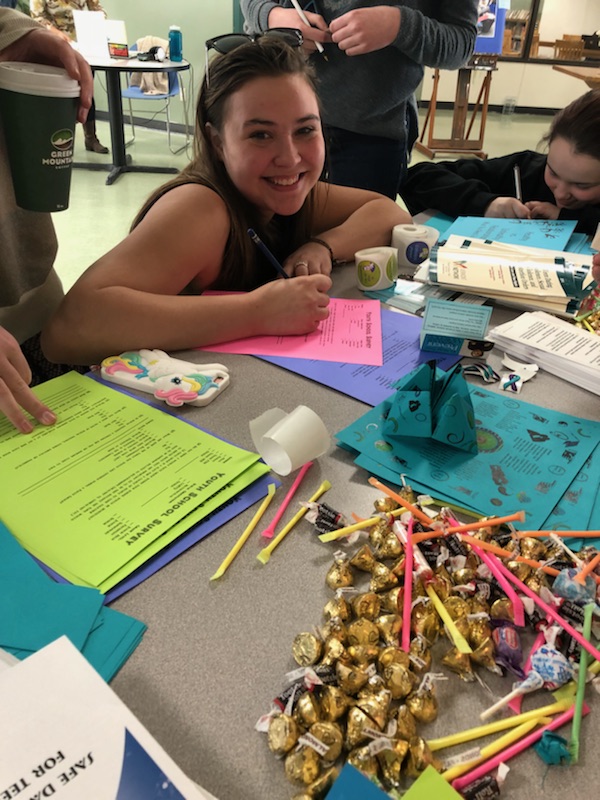
Here are the schedules (At-A-Glance and more detailed) that were used for the activities for the week. During the Teen Health Week, there was excitement in the school. Students went to various callback opportunities for the week; ranging from a Faculty-Student volleyball game for Physical Health Day to an Environmental Health presentation about Climate Change by Green Team high school students. Tabling in the atrium space during lunch was successful as well - a diverse group of presenters was there to answer questions that students had. Students learned from fellow peers when Anatomy & Physiology students presented a wide variety of information during the lunch bands for that week.
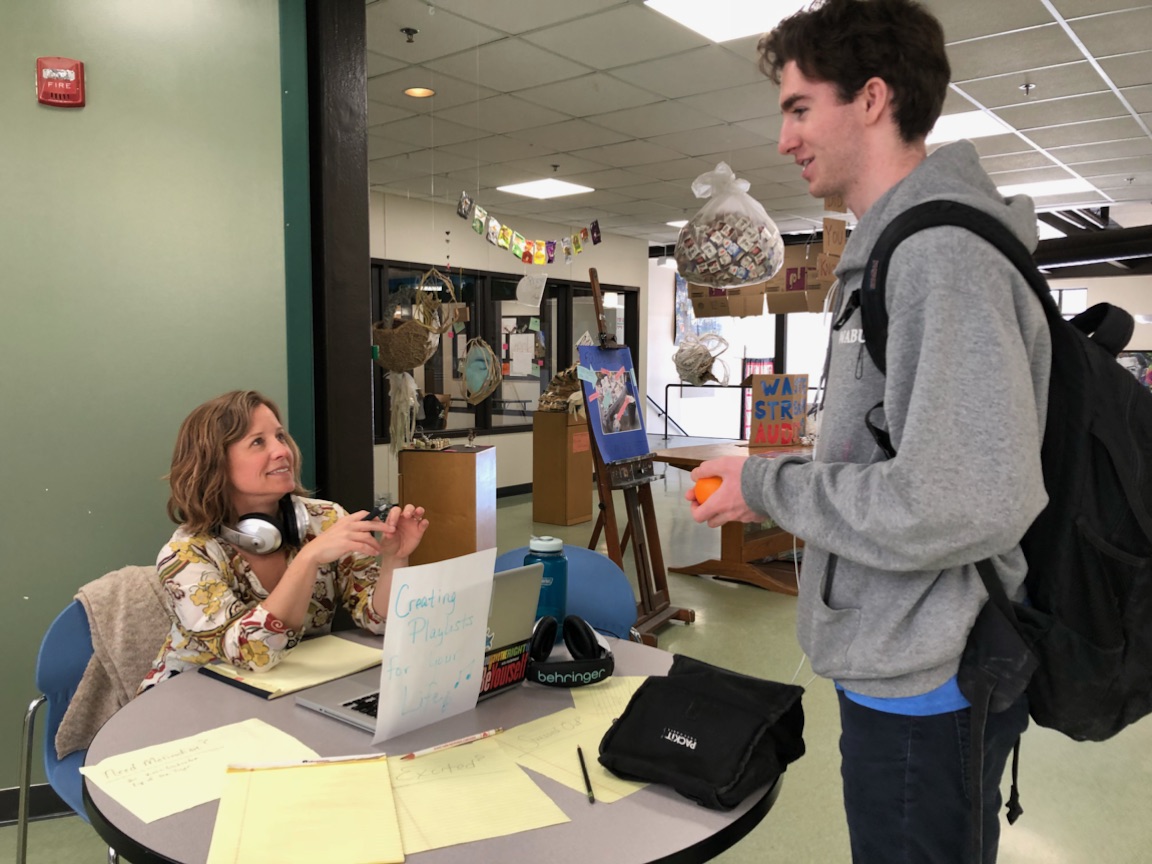
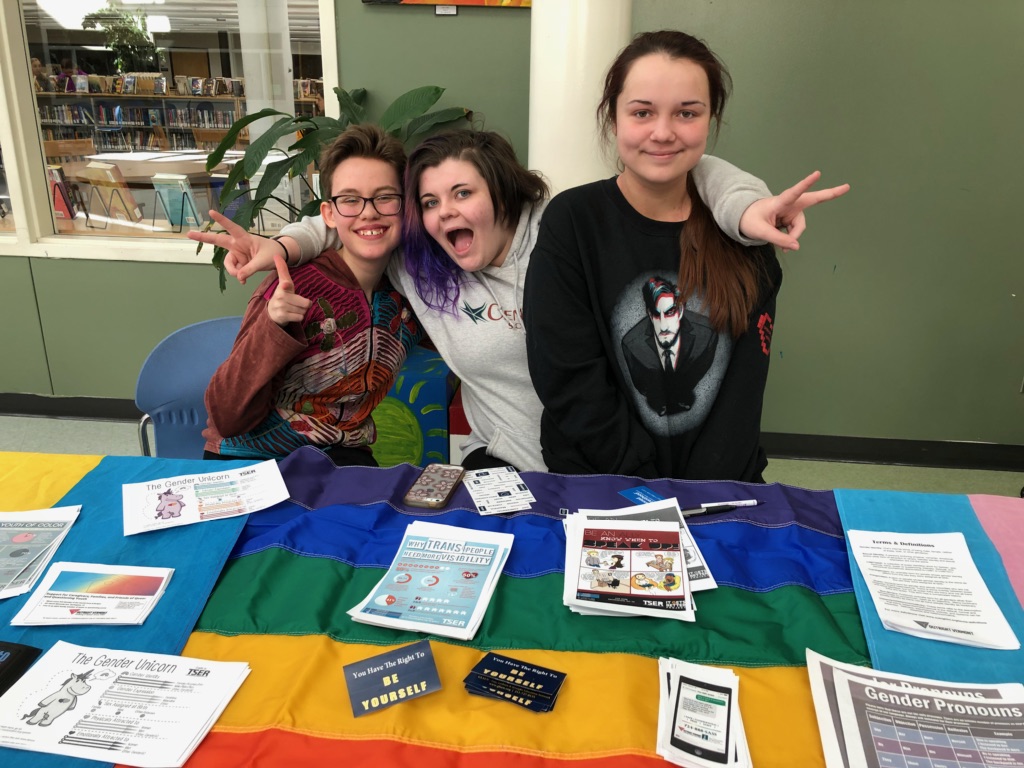
Among the diverse group of presenters in the atrium during the lunch band was Outright VT. This non-profit organization’s mission is to build safe, healthy, and supportive environments for gay, lesbian, bisexual, transgender, queer, and questioning youth ages 13-22 (Outright Website). Outright Vermont (@outrightvermont) shared information with Middle and High School students and answered questions posed by students. They shared pamphlets and information related to healthy relationships and offered ideas for how to get more involved in Teen Health events happening around the state.
Another lunch band presenter was the Central Vermont Solid Waste Management (CVSWM). A staff member from CVSWM and student-leaders from the Green Team hosted a table in the atrium to share the recent findings from the U-32 trash audit. The audit happened several weeks before Teen Health Week, and this was a fitting venue for the Green Team to share their findings and make recommendations to the U-32 community moving forward.
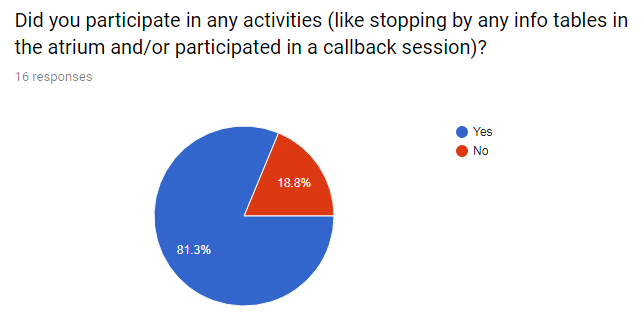
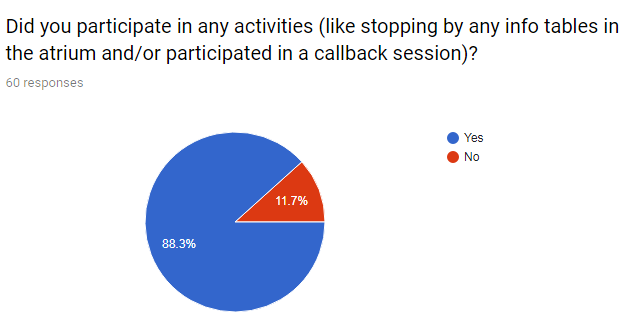
Following the Teen Health Week, Meaghan emailed a Google Form for feedback to faculty, staff, and students. The feedback was overwhelmingly positive - this was awesome and we need to do more of this. One student stated that, “This was an awesome event, I heard from many people that they participated and enjoyed the callback activities, and I enjoyed them as well”. Another student commented in the Google Form that, “I honestly can't think of anything that [was] missed this year; all of the topics were very well represented through tabling and special callbacks and I really liked the way this event connected all different parts of our school under a bigger topic of health”. In terms of faculty/staff and student attendance of the events during the week, here were the responses:

Faculty & Staff Response


Student Response


In response to that feedback from students and adults alike, Meaghan teamed up with faculty in the building to provide two other Health opportunities for students. Callbacks on May 4th and May 18th have been set up that offer a wide range of Health and Wellness opportunities for adolescents. Students can self-select to attend one of these Friday callback events, or choose to attend a callback with a teacher for regular academic support. Callback opportunities on these two days include activities such as Collage Creations (for Emotional & Mental Health), Female Sexual Health Sesh, Disc Golf, Lawn Games, and Self-Defense.
An area for growth for next year is involving students more in the beginning-to-end process. Students are asking for these types of discussions to happen with adults that they trust (particularly related to Substance Abuse and Sexual Health). The momentum is building and the interest is present. In our efforts towards personalization and flexible pathways, it is clear that students have a voice and want to be heard. From asking questions of community members during lunch bands to presenting about their interests during a callback session, students want an active role in their health and wellness. The next step will be involving more students in the process so that peer teaching and peer collaboration can be expanded.

Meaghan Falby teaches Health and Living Arts at U-32 Middle High School. Prior to U-32, Meaghan taught in the Barre Town and Barre City School District as the Middle School Family & Consumer Sciences and Health Educator. Meaghan’s teaching philosophy is “Healthy Students = Healthy Learners.” Follow Meaghan on Twitter @meg_falby or on Instagram at u32Health and u32Livingarts.

Alison Gauthier is a 2006 U-32 alumna. She teaches 9th grade Earth Science/Physics, 10th grade Biology, and junior-senior Anatomy & Physiology at U-32 Middle High School. Alison’s teaching philosophy is that “when students are doing the work, students are doing the learning”. Alison is an advocate for PLPs, student-negotiated curriculum, and proactive RP circles. Starting this fall, Alison will be teaching Sophomore Biology at CISQD in Qingdao, China. *Sharing is Caring* Here are Alison’s class sites: 9th grade Science 10th grade Biology Anatomy & Physiology

Sunday, March 11, 2018

Flexible Pathways: Building Community Partnerships for Student Success

Today’s post is brought to you by Don Taylor, language arts and social studies teacher at Main Street Middle School in Montpelier and co-director of PLP Pathways.
Introduction
As Act 77 matures, many different elements of personalized learning, PLPs, and flexible pathways are being explored by educators across the state. These developments are provoking innovative discussions, new approaches to curriculum development and enhanced learning opportunities for students. Last month, in our PLP Pathways webinar, we focused on how the development of flexible pathways, in conjunction with community partners, can result in programming that would otherwise be out of reach for our students and teachers. Today I’d like to reflect on that conversation but also identify key factors that teachers should consider as they begin exploring the different flexible pathways that may be available in their communities, through partnerships with community organizations, or linked to existing curriculum.
According to the Agency of Education, “The Flexible Pathways Initiative, created by Act 77 of 2013 ……..encourages and supports the creativity of school districts as they develop and expand high-quality educational experiences that are an integral part of secondary education in the evolving 21st-century classroom. Flexible pathways also promote opportunities for Vermont students to achieve postsecondary readiness through high-quality educational experiences that acknowledge individual goals, learning styles, and abilities; and increase the rates of secondary school completion and postsecondary continuation in Vermont.”1
As a middle school teacher, I take this to mean any project-based, community-based, or service learning project that provides students with the opportunity to apply their curriculum-based and transferable skills to solve real-world problems for authentic audiences. It also sounds like a lot of work. For interested teachers, developing these opportunities can feel overwhelming. Where do we start?
Building Time in the Schedule
As part of our integration of Act 77, my team at Main Street Middle School developed a specific program to allow students the opportunity to explore learning opportunities around central themes of environmental awareness and sustainability. Called The Green Team, this portion of the curriculum takes place every Monday afternoon. Students have selected committees within which they address specific sustainability issues. Committees include Classroom Composting, Green Team News, and the Drive Committee to name a few. I consider these “flexible pathways” to learning as they provide students the opportunity to work on real-world issues and develop evidence of their growth and learning relative to the transferable skills.
Bringing the Community Into the Classroom
One of the key factors in creating The Green Team was our desire to expose students to critical issues in an equitable way. That is, we wanted to make sure that all students had the opportunity to experience these opportunities rather than relying on family support, access to resources, or existing relationships. In order to achieve that, we reached out to community partners. This is a key factor. Across the state of Vermont, there are numerous organizations who are willing, able, and ready to deliver outstanding educational opportunities to Vermont students.
Three organizations that have been instrumental to our developing flexible pathways include: the Central Vermont Solid Waste Management District, the Vermont Energy Education Program and the UVM 4-H Teen and Leadership Program through the University of Vermont Extension. These organizations have presented to our class, organized learning activities, and provided logistical support for both school-based flexible pathways and extended learning opportunities in the community. In the process, they have exposed students to a wide range of important issues, educational opportunities, and essential connections between the community and schools.
So what might this look like in the classroom? A key example is the Teens Reaching Youth program developed and offered by Lauren Traister, the 4-H Teen & Leadership Program Coordinator for the aforementioned University of Vermont Extension based in Morrisville, Vermont. Our conversation in the last PLP Pathways webinar touched on many of the critical benefits that organizations can provide for students.
In the case of the TRY program, interested students first go through a fairly rigorous application process. If accepted, they receive a full day of training and education about the requirements for project completion. Once trained, teams of students are responsible for finding partner classrooms of elementary students. The TRY team then provides those elementary classrooms with 6-8 weeks of educational lessons based on one of five sustainability topics.
Our team has had students in the TRY program for the past 5 years and the experience has been outstanding. Students utilize personal responsibility, time management, collaboration and communication skills to achieve success. Afterwards, they are evaluated by the cooperating teacher and receive critical feedback on their performance. This type of real-world educational experience is a dynamic flexible pathway/learning opportunity that would not be possible without essential community partnerships. Moreover, by bringing the opportunity into the classroom, we are able to give a wider range of students the chance to participate.
A key component that is critical for the success of flexible pathways is the use of proficiency-based learning and assessment. When teachers can clearly define levels of proficiency and the criteria to meet those proficiencies, students can provide a wide range of evidence that demonstrates their success. Rather than tied to specific, curriculum related activities, proficiencies allow students to meet proficiencies through a variety of activities that, in the case of flexible pathways, may be dependent on their experience rather than one directed by teachers. For example, students in the TRY program, striving to meet standards for speaking and listening, can upload video of participant led class discussions from their TRY experience as evidence of their meeting the proficiency. Teachers and districts set the criteria, but the flexible pathways opportunities allow students to meet those proficiencies in a wide range of relevant, engaging and rigorous learning opportunities.
A second key component that makes flexible pathways successful is the existence of a strong PLP program. As students move into a variety of flexible pathway learning activities, the PLP serves as a platform to collect evidence of growth and learning, to connect the flexible pathways experience to key curriculum standards and skills, to set goals, and for students to reflect on their progress. Mastery of proficiencies can be demonstrated through the documentation and collection of evidence related to the flexible pathways experience. Without the PLP, tracking student growth and learning can be more challenging. Finally, the PLP also allows for a wide range of proficiency-based evidence to be included in the student’s body of work. Photographs, videos, testimonials from community partners and similar evidence can be integrated into the PLP in order to demonstrate student proficiency.
Conclusions
Developing relationships with community partners, engaging those partners within the classroom, and using proficiencies and PLPs to collect evidence of student growth and learning combine to establish flexible pathways as a powerful and innovative educational opportunity. Vermont has a bountiful selection of outstanding organizations willing to partner with students, teachers, and schools to make learning real, relevant, and applicable to our young people. Moving forward, consider developing the community partnerships and flexible pathways that will provide students with equitable, rigorous, and meaningful learning opportunities.

  1. "Flexible Pathways | Agency Of Education." Education.vermont.gov. N. p., 2018. Web. 11 Mar. 2018.